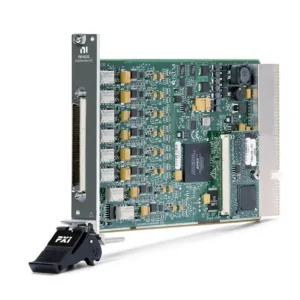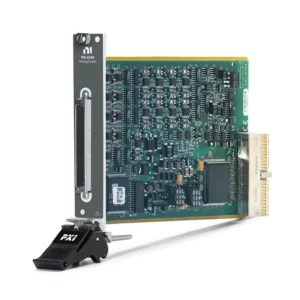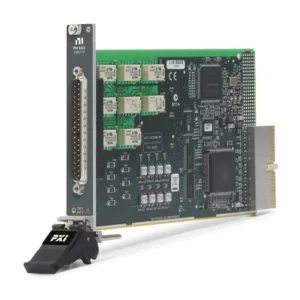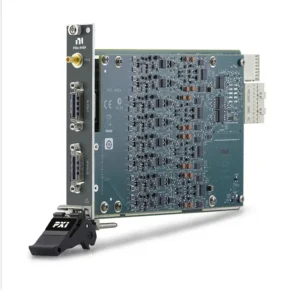




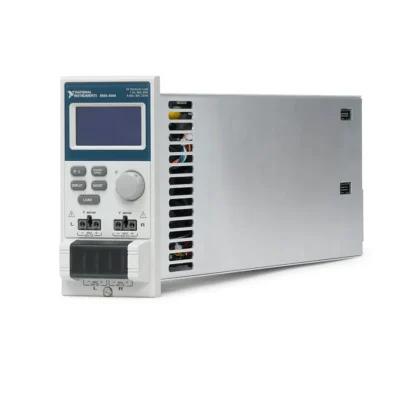
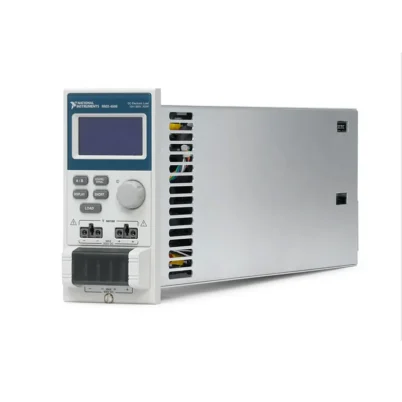
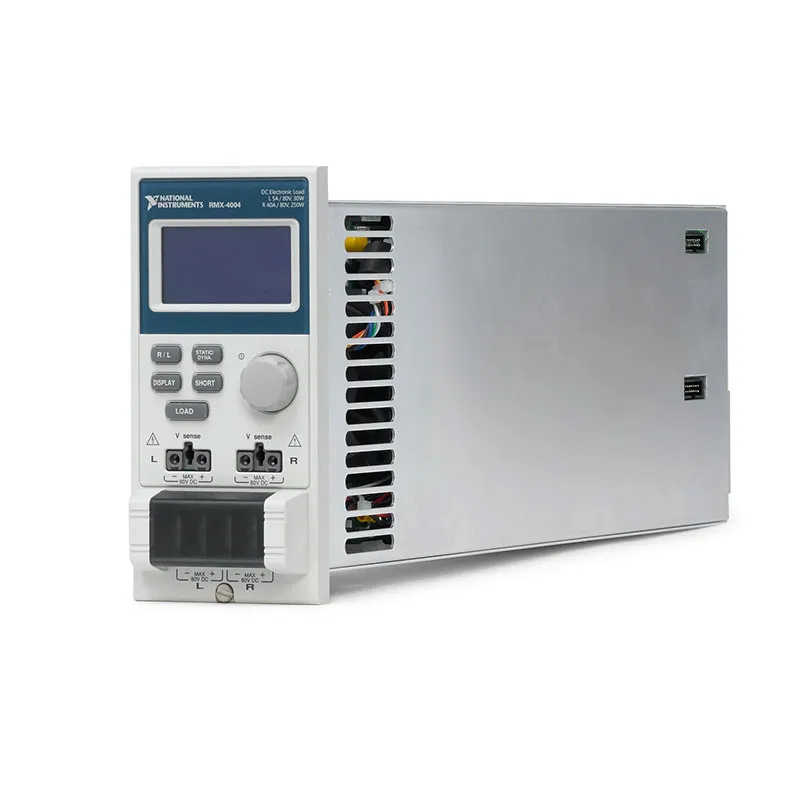
Земля NI RMX-4005 is a single-channel programmable DC electronic load designed for power-supply validation, power-converter testing, battery evaluation and automated production test applications.
With an input power capacity of 350 W, диапазон рабочего напряжения 0 V to 80 V and current sinking capability up to 70 A, the RMX-4005 is particularly suitable for testing low-voltage, high-current power sources. Multiple units can also be connected in parallel when greater power or current capacity is required.
Key Features of the NI RMX-4005
- Single-channel programmable DC electronic load
- 350 W maximum input power
- 0 V to 80 V operating voltage range
- 0 A to 70 A current measurement and sinking range
- Constant current operating mode
- Constant voltage operating mode
- Constant resistance operating mode
- Constant power operating mode
- Static and dynamic load testing
- Programmable current slew rate
- Sequence operation for automated load profiles
- Go/NoGo limit testing
- USB 2.0 computer connectivity
- Parallel operation for increased load capacity
- Suitable for standalone and automated testing
RMX-4005 Technical Specifications
| Product Model | RMX-4005 |
|---|---|
| Part Number | 786531-01 |
| Product Type | Programmable DC Electronic Load |
| Number of Channels | 1 |
| Maximum Input Power | 350 W |
| Voltage Range | 0 V to 80 V |
| Current Range | 0 A to 70 A |
| Operating Modes | CC, CV, CR and CP |
| Dynamic Operation | Supported |
| Sequence Operation | Supported |
| Go/NoGo Testing | Supported |
| Parallel Operation | Multiple RMX-4005 devices can be combined |
| Computer Interface | USB 2.0 |
| Calibration Interval | 1 year |
| Product Status | Active |
RMX-4005 Part Number and Configuration
| Part Number | Конфигурация | Maximum Power | Maximum Voltage | Максимальный ток |
|---|---|---|---|---|
| 786531-01 | Single-channel programmable DC electronic load | 350 W | 80 V | 70 A |
The RMX-4005 is optimized for low-voltage, high-current applications. The operating point must remain within the instrument’s voltage, current and 350 W power limits.
How the RMX-4005 Electronic Load Works
The RMX-4005 absorbs power from a connected device under test instead of supplying power to it. By controlling the amount of current drawn from the DUT, it can simulate the behavior of an electronic circuit, battery-powered product or variable system load.
The instrument can be used to evaluate voltage regulation, current limiting, transient response, protection functions and long-term stability under repeatable load conditions.
Constant Current Mode
In constant current mode, the RMX-4005 sinks the programmed current regardless of changes in the input voltage, provided the operating point remains within the supported range.
Constant current mode is commonly used to test power supplies, batteries, chargers and DC/DC converters. Static operation applies a steady current, while dynamic operation switches between different load levels to simulate changing power demand.
Constant Voltage Mode
In constant voltage mode, the electronic load adjusts the current it absorbs to maintain the programmed voltage at its input terminals.
This mode is useful for battery discharge testing, current-source evaluation and applications where the DUT must operate against a controlled voltage condition.
Constant Resistance Mode
Constant resistance mode allows the RMX-4005 to simulate a resistive load. The current changes in proportion to the applied voltage according to the programmed resistance value.
This mode helps engineers evaluate power sources under conditions similar to heaters, resistive components and other loads whose current consumption changes with voltage.
Constant Power Mode
In constant power mode, the RMX-4005 adjusts the load current as the input voltage changes to maintain the programmed power level.
This behavior is useful for testing power converters and electronic products that draw approximately constant power across their operating voltage range.
Dynamic and Transient Load Testing
Dynamic operation switches between two or more load levels to reproduce changing current demand. Engineers can use this function to evaluate power-supply transient response, voltage overshoot, undershoot and recovery time.
Programmable levels, timing and slew rate help create repeatable load conditions for comparing power-supply designs or performing automated quality checks.
Programmable Sequences
The RMX-4005 supports programmable sequences for applying a series of load levels and durations. These sequences can reproduce startup conditions, operating cycles, standby modes and other real-world power profiles.
Sequence operation reduces the need for continuous computer commands and improves repeatability in manufacturing and reliability test systems.
Go/NoGo Testing
Go/NoGo functionality can be used to compare measured results against predefined limits. This provides a straightforward pass-or-fail indication for production testing and component screening.
Limit-based evaluation can help identify DUTs with poor voltage regulation, excessive voltage drop or incorrect response under load.
Parallel Operation for Higher Power
Multiple RMX-4005 devices can be connected in parallel to increase the available load current and power capacity. This makes it possible to expand an existing test system when future projects require more than 350 W.
When configuring parallel operation, verify that current is distributed correctly between the units and that all cables, terminals and fixtures are rated for the combined current.
USB Computer Control
The RMX-4005 provides USB 2.0 connectivity for computer-based configuration and automation. A test program can configure load modes, current levels, sequences and limits while retrieving voltage, current and status information.
USB control is suitable for automated production stations, engineering validation systems and laboratory applications that require repeatable test execution.
Typical RMX-4005 Applications
- AC/DC and DC/DC power-supply testing
- Low-voltage, high-current power-rail validation
- Battery discharge testing
- Battery charger evaluation
- Voltage regulator testing
- Power-management circuit validation
- Automotive electronic testing
- Industrial power-system testing
- LED driver evaluation
- Transient response testing
- Burn-in and reliability testing
- Automated production testing
Software and Automation Support
The RMX-4005 can be controlled through its supported NI driver and USB interface. Engineers can integrate the electronic load into automated applications developed with LabVIEW or other compatible programming environments.
Before developing an automated system, verify the required driver version, operating-system compatibility, USB communication settings and application-programming interface.
RMX-4005 Wiring and Installation
Because the RMX-4005 can sink up to 70 A, use short, low-resistance cables with a conductor size appropriate for the maximum expected current. Undersized wiring can cause excessive voltage drop, heating and inaccurate measurements.
Make secure terminal connections and confirm correct polarity before enabling the load. The combined voltage, current and power operating point must remain within the RMX-4005 input ratings.
Cooling and Power Dissipation
The RMX-4005 converts absorbed electrical power into heat. Maintain adequate airflow around the device and do not block its cooling vents.
When operating near the 350 W limit or installing multiple units together, review rack ventilation and ambient-temperature conditions. Overtemperature protection may activate if cooling is insufficient.
RMX-4005 Troubleshooting
Why does the electronic load not draw the programmed current?
Confirm that the DUT voltage is sufficient, the load input is enabled and the programmed operating point is within the 80 V, 70 A and 350 W limits. Also inspect the cables, terminals and polarity.
Why does the RMX-4005 shut down during a test?
The instrument may have reached a voltage, current, power or temperature protection limit. Reduce the load setting, check the DUT for abnormal behavior and ensure that the cooling vents are unobstructed.
Why is the measured voltage lower than expected?
High current flowing through cables and connections can create a significant voltage drop. Use shorter cables, larger conductors and clean, secure connections.
Why does the load response differ from the programmed sequence?
Check the selected operating mode, current range, slew-rate setting, sequence timing and DUT response. The power source may be entering its own current-limit or protection mode.
Why can the computer not detect the RMX-4005?
Verify the USB cable, driver installation, computer USB port and instrument power. Avoid unpowered USB hubs and confirm that the device appears correctly in the supported NI configuration software.
Why is parallel operation not sharing current evenly?
Use cables of similar length and resistance, confirm identical operating settings and inspect all connections. Differences in wiring resistance can cause uneven current distribution.
RMX-4005 Comparison with Similar Electronic Loads
| Модель | Каналы | Maximum Power | Maximum Voltage | Максимальный ток | Наилучшее использование |
|---|---|---|---|---|---|
| RMX-4003 | 2 | 100 W per channel | 80 V | 20 A per channel | Two-channel lower-power testing |
| RMX-4004 | 2 | 250 W and 30 W | 80 V | 40 A and 5 A | Asymmetric dual-channel testing |
| RMX-4005 | 1 | 350 W | 80 V | 70 A | Low-voltage, high-current testing |
| RMX-4006 | 1 | 350 W | 500 V | 10 A | High-voltage testing |
Recommended Related Products
- NI RMX-4003 Electronic Load – provides two 100 W channels for applications requiring independent dual-channel loading.
- NI RMX-4004 Electronic Load – combines a 250 W high-power channel with a separate 30 W channel.
- NI RMX-4006 Electronic Load – provides the same 350 W power capacity with a higher 500 V voltage range.
- NI RMX-4102 Programmable Power Supply – supplies up to 432 W for power-source and electronic-load test configurations.
- NI RMX-4123 Programmable Power Supply – provides up to 650 V for high-voltage power testing.
How to Select the Right Electronic Load
Choose the RMX-4005 when the DUT operates at 80 V or below and requires load currents up to 70 A with a maximum power dissipation of 350 W.
Select the RMX-4003 or RMX-4004 when multiple independent load channels are more important than maximum current. For devices operating above 80 V, consider the RMX-4006 with its 500 V input range.
Why Choose the NI RMX-4005?
The RMX-4005 combines 350 W power capacity, 70 A current capability, four primary operating modes and automated sequence functions in a flexible electronic-load platform. Its parallel operation capability also allows the test system to expand as power requirements increase.
Frequently Asked Questions
What is the maximum input power of the RMX-4005?
The RMX-4005 can dissipate up to 350 W within its specified operating range.
What are its voltage and current ranges?
It supports input voltages from 0 V to 80 V and load currents from 0 A to 70 A.
Which load modes does the RMX-4005 support?
It supports constant current, constant voltage, constant resistance and constant power modes.
Does the RMX-4005 support dynamic load testing?
Yes. It can switch between programmed load levels to test the transient response of a power supply or converter.
Can multiple RMX-4005 units be connected in parallel?
Yes. Multiple devices can be combined to increase the available load power and current capacity.
Does the RMX-4005 require a PXI chassis?
No. It is a standalone electronic-load device and communicates with a computer through USB 2.0.
What is the RMX-4005 part number?
The NI orderable part number is 786531-01.
Is the RMX-4005 still an active product?
Yes. NI currently classifies the RMX-4005 as an active product.
What is included with the RMX-4005?
The standard package includes the RMX-4005 device and safety, environmental and regulatory documentation. Confirm required cables and accessories when ordering.
Request a Quote for the NI RMX-4005
Contact us for current availability, lead time and project pricing for the NI RMX-4005 350 W DC Electronic Load. We can also help verify compatible power supplies, USB control requirements and higher-power parallel configurations for your test system.