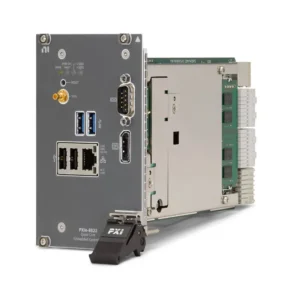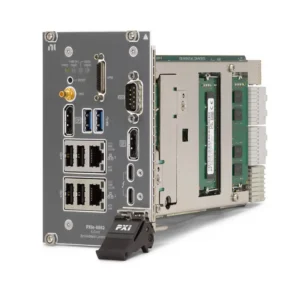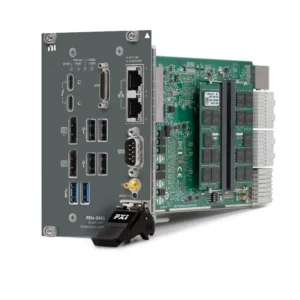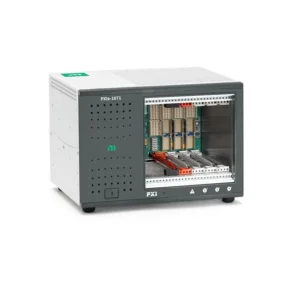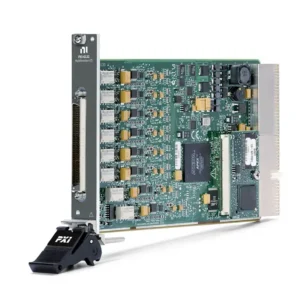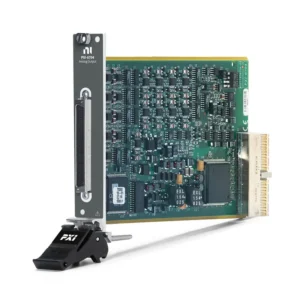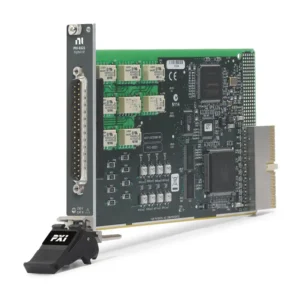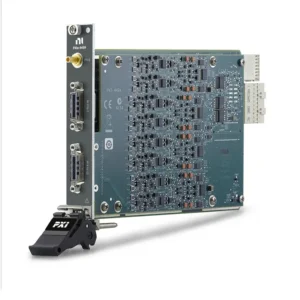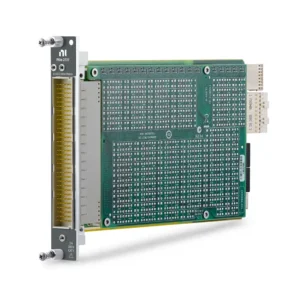


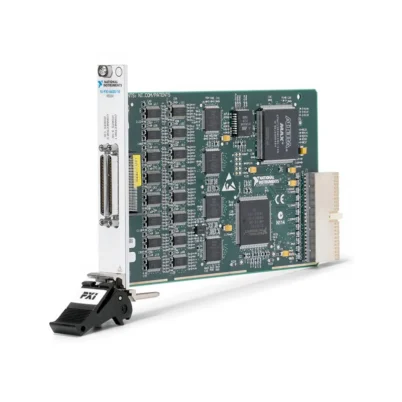
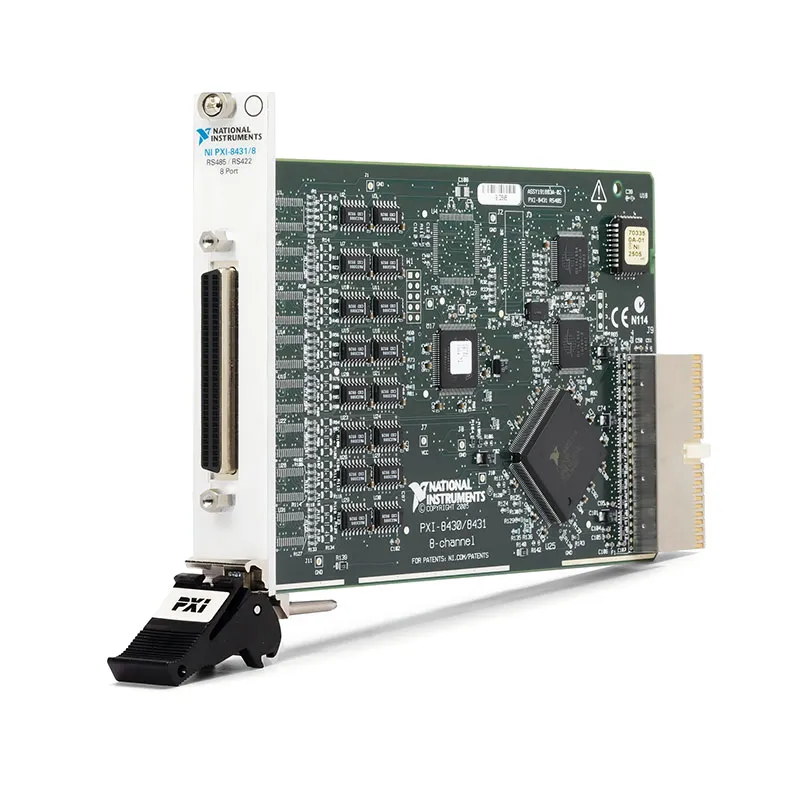
PXI-8431/8 8-Port RS-485 and RS-422 Serial Module
Земля NI PXI-8431/8 is an eight-port, nonisolated RS-485 and RS-422 serial interface module for industrial communication, automated testing and embedded-device validation. Differential signaling provides better noise rejection and supports longer cable distances than conventional single-ended RS-232 communication.
The module supports communication rates up to 3 Mbaud in applicable RS-422 and RS-485 configurations. It also provides DMA transfers, multithreaded operation and flexible transceiver modes for communicating with point-to-point and multidrop serial networks.
Key Features of the PXI-8431/8
- Eight independent RS-485/RS-422 ports
- Up to 3 Mbaud serial communication
- Two-wire and four-wire operation
- Full-duplex and half-duplex configurations
- Automatic transceiver control for two-wire RS-485
- DMA-based data transfers
- Multithreaded communication support
- Suitable for multidrop networks
- Nonisolated port design
- NI-Serial and NI-VISA support
- Compact 3U PXI form factor
- High-density breakout connectivity
PXI-8431/8 Technical Specifications
| Product Model | PXI-8431/8 |
|---|---|
| Product Type | Eight-port PXI serial interface |
| Serial Standards | RS-485 and RS-422 |
| Number of Ports | 8 |
| Port Isolation | Nonisolated |
| Maximum Baud Rate | Up to 3 Mbaud |
| Two-Wire Auto-Control Rate | Up to 2 Mbaud |
| Wiring Modes | Two-wire and four-wire |
| Duplex Modes | Half duplex and full duplex, configuration dependent |
| Network Types | Point-to-point and multidrop |
| Data Transfer | DMA-based architecture |
| Software | NI-Serial and NI-VISA |
| Bus Platform | PXI |
| Module Format | 3U PXI |
| Front Connection | High-density connector used with compatible breakout cabling |
RS-485 and RS-422 Communication
RS-422 is commonly used for point-to-point or multidrop receive configurations with separate transmit and receive pairs. RS-485 adds support for shared-bus multidrop networks in which multiple transceivers can communicate over the same differential pair.
The correct operating mode depends on the connected equipment. Two-wire RS-485 normally uses a shared transmit/receive pair, while four-wire operation uses separate pairs and can support full-duplex communication.
Automatic Transceiver Control
In a two-wire RS-485 network, a transmitter must release the bus after sending data so another node can respond. Automatic transceiver control manages this direction change without requiring the application to toggle a separate control line manually.
The supported rate for two-wire auto-control operation can differ from the module’s highest general serial rate. Confirm the selected transceiver mode and baud-rate limitation during system configuration.
Differential Serial Advantages
Differential signaling improves immunity to common-mode electrical noise and is useful for factory automation, environmental chambers and distributed test equipment. Proper cable selection and termination remain essential for reliable high-speed operation.
PXI-8431/8 Part Number and Accessories
| Item | Описание |
|---|---|
| PXI-8431/8 | Eight-port, nonisolated RS-485/RS-422 PXI module |
| High-Density Serial Cable | Connects the module to a compatible eight-port breakout assembly |
| RS-485/RS-422 Breakout Assembly | Provides accessible connectors for the individual serial ports |
| Twisted-Pair Cable | Maintains the differential signal path between nodes |
| Termination and Bias Components | Provide appropriate line termination and idle-bus bias when required |
| External Isolator | Adds galvanic isolation for installations with ground-potential differences |
Select cables according to the exact PXI-8431/8 pinout. RS-232 breakout products must not be substituted simply because their connectors appear mechanically similar.
PXI-8431/8 Applications
- Industrial controller communication
- RS-485 multidrop networks
- Environmental chamber control
- Motor-drive and motion-system testing
- Embedded-device validation
- Автоматизация производства
- Building-control communication
- Modbus RTU test systems
- Long-distance serial links
- Multi-device production testing
Industrial Communication
The PXI-8431/8 can connect a test system to programmable logic controllers, motor drives, power meters and other industrial equipment. Protocol handling such as Modbus RTU is normally implemented by the application or an appropriate software library.
Multidrop Test Networks
Multiple addressed devices can share an RS-485 bus, reducing cable count. The system designer must manage addressing, termination, biasing, response timing and transmitter contention.
PXI-8431/8 Installation Workflow
Step 1: Install the Driver
Install a compatible NI-Serial driver and NI-VISA before configuring the hardware.
Step 2: Install the PXI Module
Power down the chassis, insert the PXI-8431/8 into an appropriate slot and secure the front panel.
Step 3: Connect the Breakout Hardware
Attach the compatible high-density cable and breakout assembly. Verify port numbering before connecting field devices.
Step 4: Select the Transceiver Mode
Configure two-wire or four-wire operation and choose the appropriate transceiver-control mode for the network.
Step 5: Wire and Terminate the Bus
Maintain signal-pair polarity, use twisted-pair cable and install termination only at the correct physical ends of the bus.
Step 6: Verify Communication
Begin at a moderate baud rate with one node, then add additional nodes after the basic command-and-response path is operating reliably.
PXI-8431/8 Troubleshooting
No devices respond
Check the TX+/TX− and RX+/RX− polarity, common reference, transceiver mode and whether the system uses two-wire or four-wire wiring.
Communication works at low speed but fails at high speed
Inspect cable impedance, termination, stub length and grounding. Long branches and incorrect termination can distort high-speed differential signals.
Only one multidrop node responds
Confirm that each node has a unique address and that no device holds the shared bus in the transmit state. Review protocol response delays and turnaround timing.
Replies are truncated in two-wire mode
Check the automatic transceiver-control configuration and timing. Ensure the remote device does not begin its response before the transmitter has released the bus.
Communication changes when other equipment is powered
The ports are nonisolated. Measure ground-potential differences and consider an externally isolated interface if the installation cannot maintain a safe common reference.
PXI-8431/8 Comparison
| Модель | Interface | Best Suited For |
|---|---|---|
| PXI-8431/8 | 8-port RS-485/RS-422, nonisolated | High-density differential serial communication |
| PXI-8431/4 | 4-port RS-485/RS-422 | Smaller differential serial systems |
| PXI-8430/8 | 8-port RS-232 | Single-ended RS-232 instruments |
| PXI-8433/4 | Isolated RS-485/RS-422 | Four-port systems requiring galvanic isolation |
PXI-8431/8 Frequently Asked Questions
How many ports does the PXI-8431/8 provide?
It provides eight independently configurable RS-485/RS-422 ports.
What is the maximum baud rate?
The module supports rates up to 3 Mbaud, while applicable two-wire automatic-control configurations support lower maximum rates.
Does it support two-wire RS-485?
Yes. It supports two-wire half-duplex and applicable automatic transceiver-control operation.
Are its ports isolated?
No. The PXI-8431/8 is a nonisolated serial interface.
Can it run Modbus RTU?
Yes, when the Modbus protocol is implemented through compatible application software or a suitable library.
Request a Quote for the PXI-8431/8
Contact us for availability and pricing for the NI PXI-8431/8 eight-port RS-485/RS-422 module. We can also identify compatible breakout cables, isolated alternatives and related PXI communication modules.