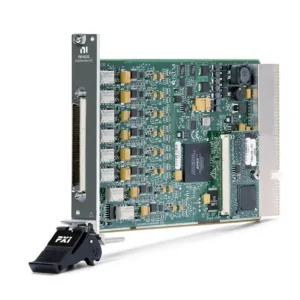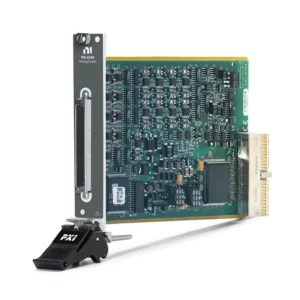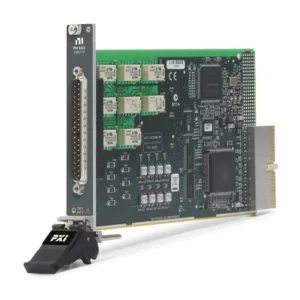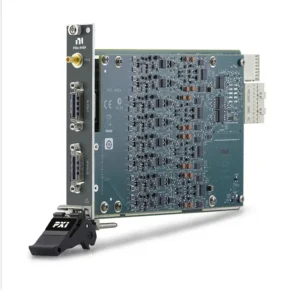




Product Introduction
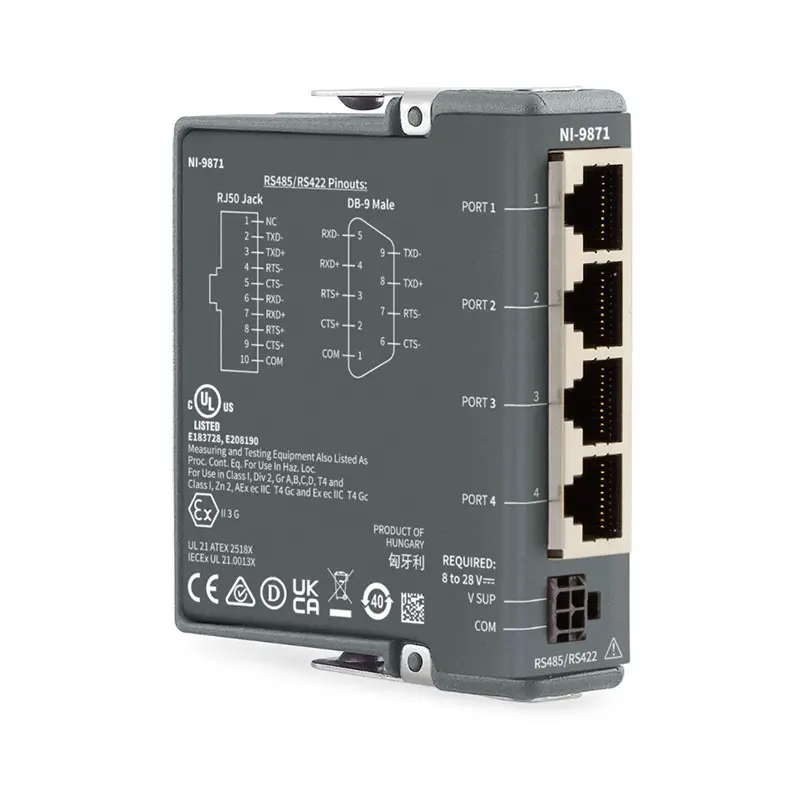
Земля NI-9871 является 4-port C Series RS-485/RS-422 serial interface module designed for industrial, embedded, and automated test applications that require reliable differential serial communication.
The NI-9871 provides four independent RS-485/RS-422 serial ports and supports communication rates up to 3.6864 Mbps. Its differential signaling architecture provides improved noise immunity and supports substantially longer cable distances than conventional RS-232 communication.
The module is particularly suitable for industrial automation, machine control, distributed instrumentation, serial sensor networks, embedded systems, laboratory automation, and legacy equipment integration.
Product Overview
Земля National Instruments NI-9871 belongs to the NI C Series serial interface family and provides four RS-485/RS-422 communication interfaces in a single C Series module.
A typical communication architecture is:
RS-485 / RS-422 Devices → NI-9871 → CompactRIO → Real-Time / FPGA Application
The NI-9871 can be combined with analog, digital, sensor, and control C Series modules to create an integrated industrial measurement and communication system.
Key Features
4 RS-485/RS-422 Serial Ports
The NI-9871 provides four independent serial communication ports.
Each port can be used to communicate with compatible RS-485 or RS-422 equipment, allowing multiple serial devices or networks to be integrated through a single C Series module.
Typical connected devices include:
- Industrial controllers
- Serial sensors
- Motor drives
- Motion controllers
- PLC equipment
- Remote I/O devices
- Industrial instruments
- Embedded controllers
- Machine-control equipment
- Legacy RS-485 devices
RS-485 Communication
The NI-9871 supports RS-485 differential serial communication.
RS-485 is widely used in industrial environments because differential signaling provides good resistance to electrical noise and supports longer communication distances than typical RS-232 connections.
The NI-9871 can be incorporated into systems using both 2-wire and 4-wire RS-485 configurations.
RS-422 Communication
The NI-9871 also supports RS-422 communication.
RS-422 uses differential signaling and is commonly used for reliable serial communication between industrial and embedded devices.
This makes the NI-9871 suitable for systems containing equipment that requires either RS-485 or RS-422 physical interfaces.
Up to 3.6864 Mbps
The NI-9871 supports a maximum serial communication rate of 3.6864 Mbps.
This provides substantially higher maximum serial throughput than many conventional industrial serial interfaces.
The actual baud rate used in an application depends on the supported baud-rate calculation, communication configuration, connected device, and system requirements.
Long-Distance Communication
The NI-9871 supports cable lengths up to approximately 1.2 km (4,000 ft) under appropriate system conditions.
This makes the module particularly useful for distributed industrial systems where equipment is located far from the controller.
Differential Signaling
Both RS-485 and RS-422 use differential electrical signaling.
Instead of representing data relative to a single signal ground, differential communication uses the voltage difference between paired conductors.
Advantages include:
- Improved noise immunity
- Longer cable distances
- Reliable industrial communication
- Better performance in electrically noisy environments
2-Wire RS-485 Support
The NI-9871 can communicate with 2-wire RS-485 devices.
For 2-wire operation, the transmit and receive differential pairs must be connected appropriately according to the NI-9871 wiring requirements.
A simplified connection is:
RX+ + TX+ → Device Data+
RX- + TX- → Device Data-
GND → Device GND
4-Wire RS-485 Support
The NI-9871 can also communicate with 4-wire RS-485 devices.
In a four-wire configuration, separate differential pairs are used for transmitting and receiving.
A simplified architecture is:
NI RX+ ← Device TX+
NI RX- ← Device TX-
NI TX+ → Device RX+
NI TX- → Device RX-
GND ↔ GND
Individual Port Buffers
The NI-9871 provides individual hardware buffering for its serial ports.
These buffers help manage serial data transfers and reduce the FPGA resources required for basic serial communication handling.
External Power
The NI-9871 requires an external power supply for operation of its serial transceivers.
The supported external supply range is approximately 8 VDC to 28 VDC.
External power helps provide reliable transceiver operation across supported serial communication conditions.
Technical Specifications
| Параметр | Спецификация |
|---|---|
| Product Type | C Series Serial Interface Module |
| Модель | NI-9871 |
| Manufacturer | Национальные инструменты |
| Platform | NI C Series |
| Serial Standards | RS-485 / RS-422 |
| Number of Ports | 4 |
| Communication Type | Differential Serial |
| Maximum Baud Rate | 3.6864 Mbps |
| Maximum Cable Length | 1.2 km (4,000 ft) |
| RS-485 Modes | 2-Wire / 4-Wire |
| RS-422 Support | Да |
| Data Bits | 5, 6, 7, 8 |
| Stop Bits | 1, 1.5, 2 |
| Flow Control | XON/XOFF, RTS/CTS, None |
| Port Buffer | Individual UART FIFO Buffer per Port |
| Тип разъема | RJ50 |
| Number of Connectors | 4 |
| External Supply Voltage | 8 VDC to 28 VDC |
| Data Line ESD Protection | ±15 kV Human Body Model |
| Maximum External Supply Power | 3.5 W |
| Operating Temperature | -40 °C до 70 °C |
| Primary Applications | Industrial Serial Communication, Machine Control, Embedded Systems and Automated Test |
How Does the NI-9871 Work?
The NI-9871 provides the physical serial interface between RS-485/RS-422 devices and a compatible NI system.
A simplified communication path is:
Industrial Device → RS-485 / RS-422 → NI-9871 → C Series System → Application Software
The host or real-time application can transmit commands to connected equipment and receive serial data for monitoring, processing, logging, or control.
What Is RS-485?
RS-485 is a differential serial communication standard widely used in industrial automation and instrumentation.
Compared with RS-232, RS-485 is particularly useful when applications require:
- Longer communication distances
- Better electrical noise immunity
- Multidrop network architectures
- Industrial environmental operation
- Communication between distributed devices
What Is RS-422?
RS-422 is another differential serial communication standard.
RS-422 commonly uses separate transmit and receive differential pairs and is suitable for high-speed, long-distance serial communication.
Because the NI-9871 supports both RS-485 and RS-422, it can be used with a broad range of industrial serial equipment.
RS-485 2-Wire vs 4-Wire
| Функция | 2-Wire RS-485 | 4-Wire RS-485 |
|---|---|---|
| Data Pairs | 1 Differential Pair | 2 Differential Pairs |
| Transmit / Receive | Shared Pair | Separate Pairs |
| Typical Duplex Mode | Half-Duplex | Full-Duplex |
| Wiring Complexity | Lower | Higher |
| NI-9871 Support | Да | Да |
RS-485 2-Wire Wiring
For a basic 2-wire RS-485 connection, NI specifies that the transmit and receive pairs must be joined externally.
| NI-9871 Signal | RS-485 Device |
|---|---|
| RX+ and TX+ | A / Data+ |
| RX- and TX- | B / Data- |
| GND | GND |
The NI-9871 does not automatically short the RX and TX lines internally for 2-wire RS-485 operation. The appropriate pairs must therefore be connected externally.
RS-485 4-Wire and RS-422 Wiring
RS-422 and 4-wire RS-485 use similar differential wiring at the physical layer.
| NI-9871 | Connected Device |
|---|---|
| RX+ | TX+ |
| RX- | TX- |
| TX+ | RX+ |
| TX- | RX- |
| GND | GND |
Maximum Baud Rate
The maximum NI-9871 baud rate is 3.6864 Mbps.
The module also supports configurable baud rates derived from its internal baud-rate generation architecture.
When a device requires an unusual or non-standard baud rate, verify that the actual baud rate generated by the NI-9871 is within the acceptable tolerance of the connected equipment.
Maximum Cable Length
NI specifies a maximum NI-9871 cable length of approximately 1.2 km (4,000 ft).
Actual reliable communication distance can depend on:
- Baud rate
- Cable characteristics
- Termination
- Network topology
- Electrical noise
- Grounding
- Number of connected devices
NI-9871 for Industrial Automation
RS-485 is widely used in industrial automation because it provides robust differential communication over relatively long cable distances.
The NI-9871 can interface with equipment such as:
- PLCs
- Industrial sensors
- Motor drives
- Motion controllers
- Remote I/O
- Industrial instruments
- Machine controllers
- Data acquisition equipment
NI-9871 for Modbus RTU
The NI-9871 provides an RS-485 physical interface that can be used in systems communicating with devices that implement Modbus RTU over RS-485.
A typical architecture is:
NI System → NI-9871 → RS-485 → Modbus RTU Device
The NI-9871 provides the serial physical interface, while the application software implements the required Modbus protocol communication.
Multi-Device RS-485 Networks
RS-485 can support multidrop network architectures where multiple devices share a differential communication bus.
A simplified network can be:
NI-9871 → RS-485 Bus → Device 1 → Device 2 → Device 3 → Device 4
The number of devices, termination requirements, addressing, and communication protocol depend on the specific RS-485 network design.
Machine Control Applications
The NI-9871 can provide communication between an NI control system and serial machine components.
Например:
CompactRIO → NI-9871 → RS-485 → Motor Drive
The control application can send commands to the drive and receive operating status or diagnostic information.
Distributed Sensor Networks
Industrial sensors with RS-485 interfaces can be distributed across machinery, production lines, or facilities.
The long-distance capability and differential signaling of the NI-9871 make it suitable for collecting data from these distributed serial devices.
Automated Test Applications
The NI-9871 can be integrated into automated test systems where instruments or DUTs communicate through RS-485 or RS-422.
A typical automated test sequence may:
- Initialize the NI-9871 port.
- Configure serial communication parameters.
- Establish communication with the DUT.
- Transmit a test command.
- Receive the DUT response.
- Acquire related analog or digital measurements.
- Compare the results against test limits.
- Record the test result.
CompactRIO Applications
The NI-9871 is particularly suited for integration into compatible CompactRIO systems.
A CompactRIO architecture can combine:
- RS-485 communication
- RS-422 communication
- Real-time processing
- FPGA-based control
- Analog measurement
- Цифровой ввод-вывод
- Industrial sensor measurement
This combination makes the NI-9871 useful for embedded machine control, distributed measurement, industrial automation, and real-time test applications.
LabVIEW FPGA Integration
The NI-9871 can be accessed through compatible LabVIEW FPGA architectures in CompactRIO systems.
Direct FPGA access provides flexibility for applications requiring custom serial communication behavior or close integration between communication and FPGA-based I/O.
A typical architecture is:
RS-485 Device → NI-9871 → FPGA → Real-Time Controller → Application
NI-9871 vs NI-9870
The NI-9871 and NI-9870 are closely related four-port C Series serial interface modules, but they support different electrical serial standards.
| Функция | NI-9871 | NI-9870 |
|---|---|---|
| Serial Standard | RS-485 / RS-422 | РС-232 |
| Number of Ports | 4 | 4 |
| Signaling | Differential | Single-Ended |
| Maximum Baud Rate | 3.6864 Mbps | 921.6 kbit/s |
| Maximum Cable Length | Up to 1.2 km | Shorter RS-232 Distances |
| Multidrop Networks | Supported by RS-485 | No |
| Typical Application | Industrial / Distributed Communication | Instrument / Point-to-Point Communication |
Choose the NI-9871 for RS-485 or RS-422 equipment. Choose the NI-9870 when the connected equipment requires RS-232.
NI-9871 vs RS-232 Serial Modules
| Функция | NI-9871 RS-485/422 | RS-232 Interface |
|---|---|---|
| Electrical Signaling | Differential | Single-Ended |
| Noise Immunity | Higher | Lower |
| Cable Distance | Longer | Shorter |
| Multidrop | Available with RS-485 | No |
| Industrial Networks | Well Suited | Application Dependent |
Termination Considerations
Long RS-485 and RS-422 networks may require appropriate termination to maintain signal integrity and reduce reflections.
Termination requirements depend on:
- Cable impedance
- Network length
- Baud rate
- Network topology
- Number of devices
Always follow the requirements of the connected equipment and the complete network design when selecting termination.
Grounding Considerations
Correct grounding is important for reliable RS-485 and RS-422 communication.
Even though communication uses differential signaling, the reference potential between connected devices must remain within the allowable electrical limits of the transceivers.
Verify the grounding requirements of both the NI-9871 and connected equipment before installation.
Serial Communication Configuration
The NI-9871 serial parameters must match the connected device.
Typical settings include:
- Baud rate
- Data bits
- Stop bits
- Parity
- Flow control
- RS-485 wire mode
- Communication timeout
- Protocol-specific settings
Troubleshooting NI-9871 Communication
If the NI-9871 cannot communicate with an RS-485 or RS-422 device, check the complete system configuration.
- Verify that the NI-9871 is recognized by the host system.
- Confirm that the module is installed in a compatible chassis.
- Verify the 8–28 VDC external power supply.
- Check the RJ50 cable and connector wiring.
- Confirm whether the device uses RS-485 or RS-422.
- Determine whether RS-485 uses 2-wire or 4-wire operation.
- For 2-wire RS-485, verify that RX and TX pairs are connected correctly.
- Check Data+ and Data- polarity.
- Verify baud rate.
- Check data bits, parity, and stop bits.
- Verify termination and network topology.
- Check grounding.
- Confirm the application protocol and device address.
How to Choose a C Series Serial Interface
Before selecting the NI-9871, determine:
- Required serial standard
- RS-232, RS-485, or RS-422
- 2-wire or 4-wire RS-485 requirement
- Required number of serial ports
- Required baud rate
- Required cable distance
- Multidrop network requirements
- Flow-control requirements
- External power availability
- CompactRIO compatibility
- FPGA integration requirements
- Application software compatibility
Industries
- Промышленная автоматизация
- Manufacturing
- Machine Control
- Energy
- Transportation
- Automated Test
- Laboratory Automation
- Embedded Systems
- Research and Development
- Industrial Instrumentation
Applications
RS-485 Communication
The NI-9871 provides four differential serial interfaces for communicating with RS-485 industrial equipment.
RS-422 Communication
RS-422 devices can be connected to the NI-9871 for reliable differential point-to-point serial communication.
Modbus RTU Communication
The NI-9871 can provide the RS-485 physical interface for compatible Modbus RTU systems when the required protocol is implemented in software.
Промышленная автоматизация
The module can connect CompactRIO systems to industrial controllers, sensors, motor drives, remote I/O, and other serial equipment.
Machine Control
RS-485 or RS-422 machine components can exchange commands, operating data, and diagnostic information with an NI control system through the NI-9871.
Distributed Measurement
The long-distance capability of RS-485 makes the NI-9871 suitable for communicating with distributed sensors and instruments.
Automated Test
Automated test systems can communicate with RS-485/RS-422 DUTs while simultaneously acquiring other analog and digital measurements.
Recommended Related Products
| NI-9871 | 4-port C Series RS-485/RS-422 serial interface module for industrial and embedded communication. |
| NI-9870 | 4-port C Series RS-232 serial interface module for point-to-point serial instrument communication. |
| NI-9866 | C Series LIN interface module for automotive and embedded network communication. |
| NI-9862 | C Series CAN interface module for automotive and embedded CAN network applications. |
Why Choose NI-9871?
- 4 independent serial ports
- RS-485 support
- RS-422 support
- 2-wire RS-485 support
- 4-wire RS-485 support
- Up to 3.6864 Mbps
- Up to 1.2 km cable length
- Differential signaling
- High noise immunity
- Suitable for multidrop RS-485 networks
- ±15 kV data-line ESD protection
- 8–28 VDC external power
- Wide industrial operating temperature range
- CompactRIO integration
- LabVIEW FPGA integration
- Suitable for industrial automation
- Suitable for Modbus RTU physical-layer communication
Frequently Asked Questions
What is the NI-9871?
The NI-9871 is a 4-port C Series RS-485/RS-422 serial interface module designed for industrial, embedded, and automated test applications.
How many serial ports does NI-9871 have?
The NI-9871 provides four independent RS-485/RS-422 serial ports.
What serial standards does NI-9871 support?
The NI-9871 supports RS-485 and RS-422 differential serial communication.
What is the maximum baud rate of NI-9871?
The NI-9871 supports a maximum baud rate of 3.6864 Mbps.
What is the maximum cable length of NI-9871?
NI specifies a maximum cable length of approximately 1.2 km (4,000 ft). Actual system performance depends on cable characteristics, baud rate, termination, topology, grounding, and environmental conditions.
Does NI-9871 support 2-wire RS-485?
Yes. For 2-wire RS-485 operation, the NI-9871 RX+ and TX+ lines are connected together to Data+, while RX- and TX- are connected together to Data-. The module does not automatically make these connections internally.
Does NI-9871 support 4-wire RS-485?
Yes. The NI-9871 supports 4-wire RS-485 using separate differential transmit and receive pairs.
Does NI-9871 support RS-422?
Yes. RS-422 is one of the primary serial standards supported by the NI-9871.
What connector does NI-9871 use?
The NI-9871 provides four RJ50 serial connectors. Appropriate cables or adapters can be used when connecting equipment with DB9 or terminal-style interfaces.
Does NI-9871 require external power?
Yes. The NI-9871 requires an external supply of approximately 8 VDC to 28 VDC for operation of its serial transceivers.
Can NI-9871 communicate with Modbus RTU devices?
Yes, when the Modbus RTU device uses a compatible RS-485 physical interface. The NI-9871 provides the serial physical layer, while the Modbus protocol must be implemented by the application software.
Can NI-9871 communicate with multiple RS-485 devices?
RS-485 supports multidrop network architectures, so multiple compatible devices can share a properly designed RS-485 bus. Device addressing and communication behavior are controlled by the protocol used by the application.
What is the difference between NI-9871 and NI-9870?
Земля NI-9871 supports RS-485/RS-422, while the NI-9870 supports RS-232. The NI-9871 is better suited to longer-distance, differential, and multidrop industrial communication.
Can NI-9871 be used for long-distance serial communication?
Yes. NI specifies cable lengths up to approximately 1.2 km (4,000 ft), making the NI-9871 suitable for many distributed industrial communication systems.
Can NI-9871 be used with CompactRIO?
Yes. CompactRIO is a primary platform for the NI-9871, allowing RS-485/RS-422 communication to be integrated with real-time processing, FPGA functionality, and other C Series I/O.
Can NI-9871 be used with LabVIEW FPGA?
Yes. Compatible CompactRIO configurations can access the NI-9871 through LabVIEW FPGA, providing flexible control of serial communication.
Why is my NI-9871 not communicating?
Common causes include missing external power, incorrect RS-485/RS-422 configuration, incorrect Data+/Data- polarity, improper 2-wire RX/TX connections, incorrect baud rate, mismatched parity or stop bits, improper termination, grounding problems, incorrect device addressing, or incompatible software configuration.
What should I check before purchasing NI-9871?
Verify whether the target equipment uses RS-485 or RS-422, whether RS-485 communication is 2-wire or 4-wire, the required baud rate, number of ports, cable length, termination requirements, external power supply, RJ50 cable requirements, CompactRIO compatibility, software environment, and the exact NI part number.
Заключение
Земля NI-9871 4-Port C Series RS-485/RS-422 Serial Interface Module provides four differential serial interfaces, communication rates up to 3.6864 Mbps, support for 2-wire and 4-wire RS-485 as well as RS-422, and cable lengths up to 1.2 km. It is particularly well suited for CompactRIO-based industrial automation, machine control, distributed instrumentation, Modbus RTU communication, automated test, and embedded serial communication systems.