




Product Introduction
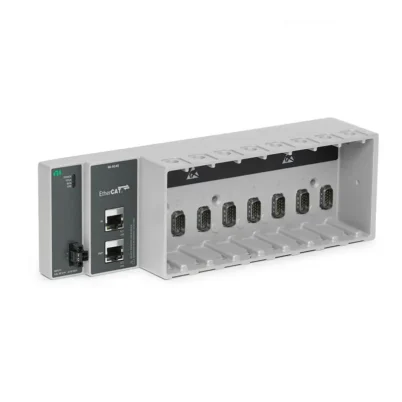
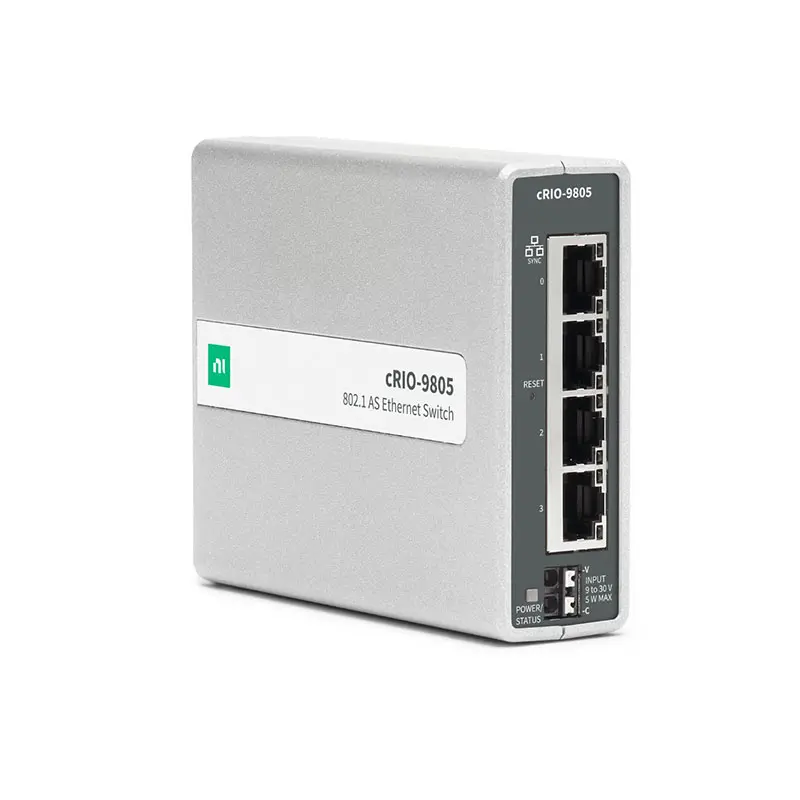
Земля NI cRIO-9805 is a high-performance solid-state storage module designed for compatible National Instruments CompactRIO systems. It provides approximately 223 GB of NVMe solid-state storage for applications that require high-speed local data logging, large measurement-file storage, and sustained data acquisition.
Unlike standard C Series measurement modules, the cRIO-9805 is designed specifically for data storage. It allows compatible CompactRIO systems to record large volumes of measurement data locally without continuously transferring all acquired data to an external host computer or network storage system.
The cRIO-9805 is particularly useful for high-channel-count data acquisition, waveform recording, vibration monitoring, structural testing, transportation testing, and other applications that generate large amounts of measurement data.
Product Overview
Земля National Instruments cRIO-9805 expands the local storage capability of compatible CompactRIO systems by providing high-speed solid-state storage directly within the embedded measurement architecture.
A typical system architecture can be represented as:
Sensors → C Series Measurement Modules → CompactRIO Controller → cRIO-9805 SSD Storage
This architecture allows acquired measurement data to be written directly to local solid-state storage, reducing dependence on continuous Ethernet data transfer.
Key Features
223 GB Solid-State Storage
The cRIO-9805 provides approximately 223 GB of usable solid-state storage capacity.
The large local storage capacity is suitable for measurement applications that generate significantly more data than can conveniently be stored in the internal memory of a CompactRIO controller.
Typical stored data can include:
- High-speed analog waveforms
- Vibration data
- Acoustic measurements
- Temperature records
- Strain measurements
- Voltage and current waveforms
- Machine-condition data
- Vehicle test data
- Structural test data
NVMe Solid-State Storage
The cRIO-9805 uses NVMe solid-state storage technology to provide high-performance local data storage.
NVMe storage provides substantially higher data-transfer performance than conventional removable storage technologies, making it appropriate for data-intensive measurement applications.
Designed for High-Speed Data Logging
One of the primary applications of the cRIO-9805 is high-speed data logging.
Measurement systems with multiple high-speed C Series modules can generate large continuous data streams. The cRIO-9805 provides local storage capacity for recording these streams directly within the CompactRIO system.
A typical workflow is:
Sensor → C Series Input Module → CompactRIO Controller → Data Processing → cRIO-9805
Local Data Storage
Local storage can be important when a CompactRIO system is installed remotely or when network bandwidth is insufficient for continuously streaming all measurement data to another computer.
The cRIO-9805 allows measurement data to remain locally stored until it can be transferred or analyzed.
Suitable for Continuous Waveform Recording
Applications such as vibration analysis, acoustic testing, transient recording, and dynamic signal acquisition can generate continuous waveform data at relatively high sampling rates.
The cRIO-9805 provides storage capacity and performance suitable for these data-intensive applications when used in a compatible CompactRIO architecture.
Solid-State Architecture
The module uses solid-state storage rather than mechanical disk technology.
Solid-state storage eliminates rotating mechanical components and is well suited to embedded measurement systems where reliability, compact size, and resistance to mechanical movement are important considerations.
CompactRIO Integration
The cRIO-9805 is designed to integrate with compatible CompactRIO controllers and systems.
This allows storage hardware to become part of the same embedded architecture used for:
- Data acquisition
- Real-time processing
- Обработка на ПЛИС
- Industrial control
- Регистрация данных
- Сетевая связь
Technical Specifications
| Параметр | Спецификация |
|---|---|
| Product Type | CompactRIO Solid-State Storage Module |
| Модель | NI cRIO-9805 |
| Platform | CompactRIO |
| Primary Function | High-Speed Local Data Storage |
| Storage Type | Solid-State Drive |
| Storage Technology | NVMe |
| Usable Storage Capacity | Approximately 223 GB |
| Primary Application | High-Speed Data Logging |
| Data Type | Measurement Data, Waveforms and Log Files |
| System Type | Embedded Measurement and Data Acquisition |
| Recommended Use | Data-Intensive CompactRIO Applications |
How Does the cRIO-9805 Work?
The cRIO-9805 acts as a high-speed local storage resource within a compatible CompactRIO system.
Measurement data is typically acquired using C Series I/O modules and processed by the CompactRIO controller.
Instead of transmitting every sample continuously across Ethernet, the application can write measurement data to the cRIO-9805.
The basic data path is:
Sensor → C Series Module → CompactRIO Controller → cRIO-9805 SSD
After acquisition, stored data can be processed locally or transferred to another system for analysis and long-term archiving.
Why Use Local Storage in CompactRIO?
Many CompactRIO applications operate remotely or acquire data faster than it is practical to continuously transmit over a network.
Local high-speed storage provides several advantages:
- Reduced dependence on network bandwidth
- Standalone data acquisition
- Continuous measurement recording
- Local buffering of large datasets
- Improved flexibility for remote installations
- Storage during temporary network interruptions
cRIO-9805 for High-Speed Data Acquisition
High-speed data acquisition systems can generate substantial amounts of data, particularly when several channels operate simultaneously.
The approximate data generation rate can be estimated using:
Data Rate = Number of Channels × Sample Rate × Bytes per Sample
For example, increasing channel count or sample rate can rapidly increase storage requirements.
The cRIO-9805 provides a dedicated local storage solution for these applications.
Continuous Data Logging
The cRIO-9805 can be used in applications where continuous measurement recording is required.
Examples include:
- Long-duration vibration testing
- Vehicle road testing
- Structural monitoring
- Machine-condition monitoring
- Power-system recording
- Экологические испытания
- Acoustic measurements
Vibration and Acoustic Data Logging
Vibration and acoustic measurements can generate large datasets because they commonly require relatively high sample rates and continuous waveform recording.
A typical CompactRIO vibration system can use:
Accelerometers → C Series Dynamic Signal Module → CompactRIO → cRIO-9805
This architecture allows raw waveform data to be stored locally for later frequency-domain, order, or condition-monitoring analysis.
Structural Testing
Structural test systems may use multiple accelerometers, strain gauges, load cells, displacement sensors, and other transducers simultaneously.
The cRIO-9805 can provide local storage for the large datasets generated during:
- Structural validation
- Modal testing
- Bridge monitoring
- Building monitoring
- Aerospace structural tests
- Mechanical fatigue testing
Automotive and Transportation Testing
CompactRIO systems are frequently used in mobile and transportation measurement applications where continuous network connectivity may not be available.
The cRIO-9805 can provide local data storage for:
- Vehicle road testing
- Powertrain measurement
- Electric vehicle testing
- Battery-system monitoring
- Vehicle vibration measurement
- Railway testing
- Mobile equipment monitoring
Мониторинг состояния оборудования
Industrial condition-monitoring systems can generate continuous vibration and process data from multiple sensors.
The cRIO-9805 can store raw measurement data locally while the CompactRIO controller performs real-time analysis.
A system may therefore perform:
Acquire → Analyze → Detect Event → Store Relevant Data
This approach can improve storage efficiency while retaining important waveform information for later analysis.
Remote Data Acquisition
The cRIO-9805 is particularly useful in remote measurement systems where network bandwidth or connectivity may be limited.
Instead of relying entirely on continuous remote streaming, the CompactRIO system can record measurements locally and transfer files when network connectivity is available.
High-Channel-Count Measurement
An eight-slot CompactRIO controller can accommodate multiple C Series measurement modules, potentially creating a high-channel-count acquisition system.
When many channels operate at high sample rates, local storage performance becomes increasingly important.
The cRIO-9805 is designed for these data-intensive CompactRIO applications.
cRIO-9805 vs Controller Internal Storage
| Функция | cRIO-9805 | Controller Internal Storage |
|---|---|---|
| Primary Purpose | Measurement Data Storage | OS, Applications and General Storage |
| Storage Capacity | Approximately 223 GB | Controller Dependent |
| Storage Technology | NVMe SSD | Controller Dependent |
| High-Speed Data Logging | Designed for This Purpose | Application Dependent |
| Large Waveform Files | Suitable | More Capacity Limited |
cRIO-9805 vs microSD Storage
| Функция | cRIO-9805 | MicroSD Card |
|---|---|---|
| Storage Architecture | NVMe SSD | Flash Memory Card |
| Primary Purpose | High-Speed Measurement Logging | General Removable Storage |
| High Data Rate Applications | Better Suited | Card Performance Dependent |
| Removability | System Integrated | Removable |
| Типичное использование | Continuous Waveform Recording | File Transfer / General Logging |
cRIO-9805 vs Network Storage
| Функция | cRIO-9805 | Network Storage |
|---|---|---|
| Local Operation | Да | No |
| Network Required During Acquisition | No | Да |
| Remote Installation | Highly Suitable | Network Dependent |
| Data Transfer | Local Storage First | Continuous Network Transfer |
| Network Failure Tolerance | Better for Local Logging | Network Dependent |
Compatible Measurement Applications
The cRIO-9805 can complement C Series modules used for many different measurement types.
Examples include:
- Analog voltage acquisition
- Current measurement
- Измерение температуры
- Strain measurement
- Vibration measurement
- Sound and acoustic measurement
- Pressure measurement
- Digital signal acquisition
- Machine-condition monitoring
Data Logging Architecture
A typical high-performance CompactRIO data-logging system can be structured as:
Physical Sensors
↓
C Series Measurement Modules
↓
CompactRIO FPGA / I/O Engine
↓
Real-Time Processor
↓
cRIO-9805 NVMe Storage
The real-time application can organize measurement data into files while simultaneously performing control, analysis, monitoring, or network communication.
Data Rate and Storage Capacity
When selecting storage for a measurement system, engineers should calculate both the required write rate and total recording capacity.
Approximate storage requirements can be calculated using:
Storage = Channels × Samples per Second × Bytes per Sample × Recording Time
Actual file sizes can also depend on:
- File format
- Metadata
- Timestamp information
- Compression
- Channel configuration
- Application buffering
Example Storage Calculation
Consider a system recording 16 channels at 100 kS/s with 4 bytes stored per sample:
16 × 100,000 × 4 = 6.4 MB/s
At this data rate, one hour of continuous acquisition would generate approximately:
6.4 MB/s × 3,600 seconds ≈ 23 GB
This example demonstrates why high-speed local storage can become important in continuous waveform-recording applications.
How to Choose a CompactRIO Storage Solution
Before selecting the cRIO-9805, evaluate:
- CompactRIO controller compatibility
- Required recording duration
- Number of measurement channels
- Sample rate per channel
- Bytes stored per sample
- Expected sustained data rate
- Required total storage capacity
- File format
- Environmental requirements
- Software compatibility
- Data-transfer strategy after acquisition
Software Considerations
Data logging performance depends on both hardware and software architecture.
Applications should be designed with appropriate:
- Data buffering
- File-write architecture
- File segmentation
- Error handling
- Storage monitoring
- Data-transfer management
The exact supported software environment should be verified against the CompactRIO controller, cRIO-9805 hardware revision, and NI software version used in the system.
Industries
- Automotive Testing
- Аэрокосмическая и оборонная промышленность
- Промышленная автоматизация
- Энергетические системы
- Transportation
- Structural Testing
- Мониторинг состояния
- Research and Development
- Machine Monitoring
- Automated Test
Applications
High-Speed Data Logging
The cRIO-9805 provides high-capacity NVMe storage for CompactRIO applications that continuously record high-speed measurement data.
Vibration Monitoring
Continuous vibration waveforms from accelerometers and dynamic signal acquisition modules can be stored locally for later analysis.
Structural Testing
Large multichannel strain, vibration, force, and displacement datasets can be recorded directly within the CompactRIO system.
Vehicle Testing
Local storage allows vehicle measurement systems to collect large datasets even when continuous network connectivity is unavailable.
Remote Data Acquisition
The cRIO-9805 allows remote CompactRIO systems to store measurement data locally before transferring it to a central server or workstation.
Continuous Waveform Recording
NVMe storage is particularly useful for applications that require long-duration recording of raw waveform data.
Recommended Related Products
| NI cRIO-9805 | 223 GB NVMe solid-state storage module for high-speed CompactRIO data logging. |
| NI cRIO-9058 | 8-slot CompactRIO controller with real-time processor, Artix-7 FPGA, dual Gigabit Ethernet, TSN, and modular C Series I/O support. |
| NI cRIO-9046 | 8-slot CompactRIO controller for industrial measurement, deterministic control, and distributed data acquisition. |
| NI C Series Analog Input Modules | Modular analog input hardware for voltage, current, sensor, and industrial measurements. |
| NI C Series Dynamic Signal Modules | Dynamic signal acquisition modules for vibration, acoustic, accelerometer, and condition-monitoring applications. |
| NI C Series Temperature Modules | C Series modules for thermocouple, RTD, and industrial temperature measurement. |
Why Choose NI cRIO-9805?
- Approximately 223 GB usable storage
- NVMe solid-state storage technology
- Designed for CompactRIO systems
- Optimized for local data logging
- Suitable for high-speed measurement data
- Supports large waveform datasets
- Reduces dependence on continuous network streaming
- Suitable for remote measurement systems
- Useful for high-channel-count acquisition
- Suitable for vibration and acoustic recording
- Suitable for structural testing
- Suitable for transportation testing
- Suitable for condition monitoring
Frequently Asked Questions
What is the NI cRIO-9805?
The NI cRIO-9805 is a solid-state storage module designed for compatible CompactRIO systems. It provides approximately 223 GB of NVMe storage for high-speed local measurement data logging.
What is the storage capacity of the cRIO-9805?
The cRIO-9805 provides approximately 223 GB of usable storage capacity.
What type of storage does the cRIO-9805 use?
The cRIO-9805 uses high-performance NVMe solid-state storage.
Is the cRIO-9805 a measurement module?
No. Its primary function is data storage rather than direct sensor measurement. Measurement signals are normally acquired using compatible C Series I/O modules and then written to the cRIO-9805.
What is the cRIO-9805 used for?
It is primarily used for high-speed local data logging in CompactRIO measurement systems, including vibration recording, structural testing, vehicle testing, condition monitoring, and other data-intensive applications.
Can the cRIO-9805 store waveform data?
Yes. High-speed waveform storage is one of the primary applications for this type of CompactRIO storage module.
Can the cRIO-9805 be used for vibration data?
Yes. The cRIO-9805 can be used to store continuous vibration waveform data acquired from compatible C Series dynamic signal modules and sensors.
Can the cRIO-9805 be used for standalone data logging?
Yes, when installed in a compatible CompactRIO system and configured with the appropriate real-time data-logging application, it can support standalone local data recording.
Why use the cRIO-9805 instead of the controller’s internal storage?
The cRIO-9805 provides substantially more dedicated measurement storage and is designed for data-intensive logging applications where controller internal storage may be insufficient.
Why use the cRIO-9805 instead of a microSD card?
The cRIO-9805 uses NVMe solid-state storage and is intended for applications requiring higher-performance local data logging. A microSD card is generally better suited to lower-rate general storage and removable file-transfer applications.
Does the cRIO-9805 require an Internet connection?
No. One of the advantages of local CompactRIO storage is that measurement data can be recorded without requiring an Internet connection or continuous connection to a remote server.
Can data be transferred after the test?
Yes. The CompactRIO application can store measurement files locally and transfer them to another computer or storage system after or during the test, depending on the system architecture.
Is the cRIO-9805 suitable for automotive testing?
Yes. Local high-speed storage can be valuable in vehicle and transportation tests where large amounts of measurement data must be recorded while network connectivity may be limited.
Is the cRIO-9805 suitable for structural monitoring?
Yes. It can provide local storage for multichannel vibration, strain, force, and other structural measurement data acquired by a compatible CompactRIO system.
How much recording time does 223 GB provide?
Recording time depends on the total data rate. Engineers should calculate the number of channels, sample rate, bytes stored per sample, file overhead, and required recording duration before determining whether the available storage capacity is sufficient.
What should I check before purchasing a cRIO-9805?
Before purchasing the cRIO-9805, verify compatibility with the exact CompactRIO controller and chassis configuration, required storage capacity, sustained data rate, software compatibility, operating environment, file format, and overall data-logging architecture.
Заключение
Земля NI cRIO-9805 CompactRIO Solid-State Storage Module provides approximately 223 GB of NVMe storage for high-speed local data logging in compatible CompactRIO systems. By adding dedicated high-performance storage directly to the embedded measurement platform, the cRIO-9805 is well suited for continuous waveform recording, vibration and acoustic measurement, structural testing, automotive testing, condition monitoring, remote data acquisition, and other data-intensive CompactRIO applications.