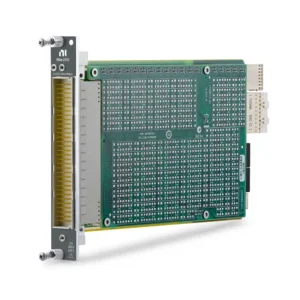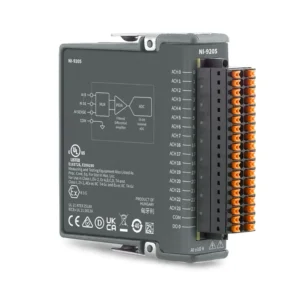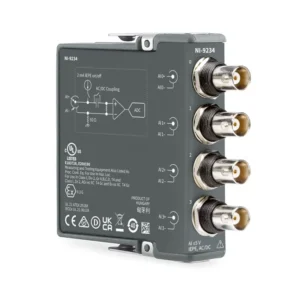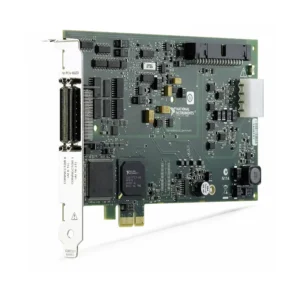





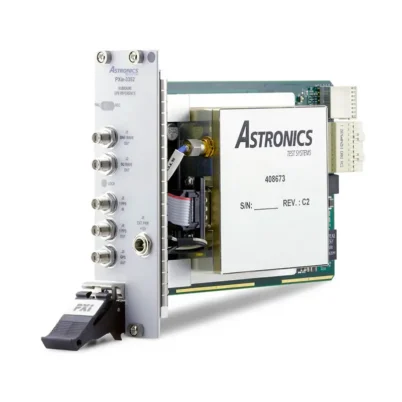
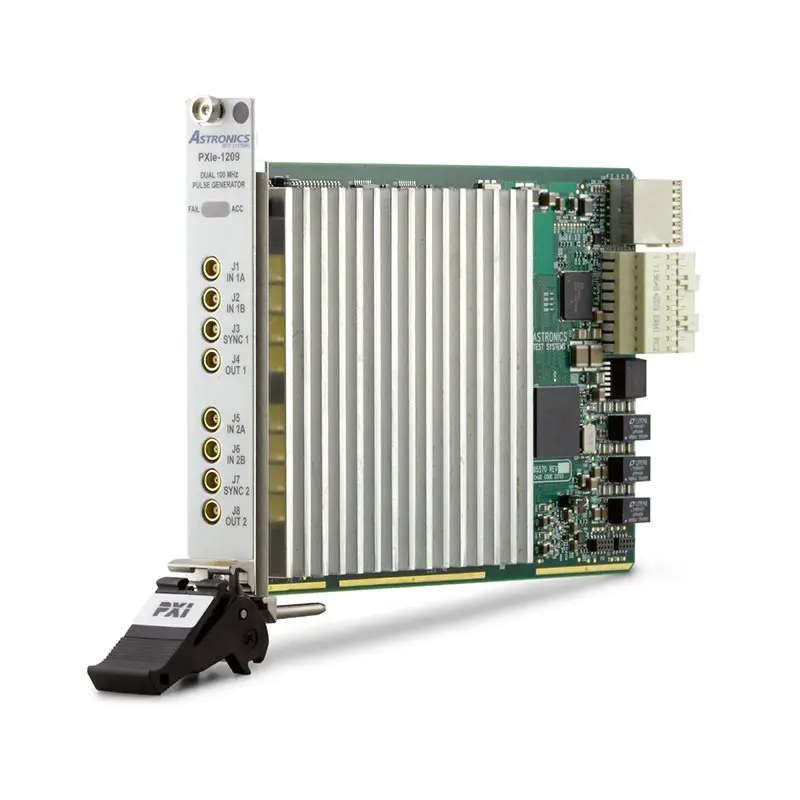
Product Introduction
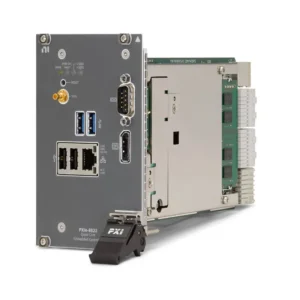
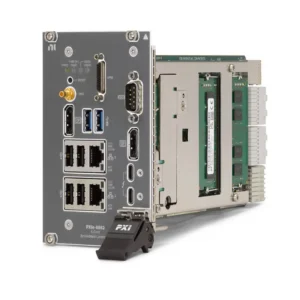
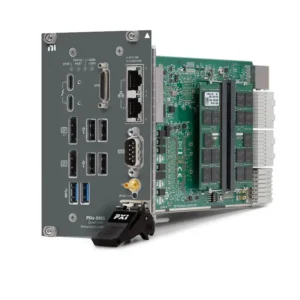
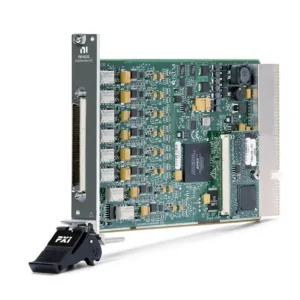
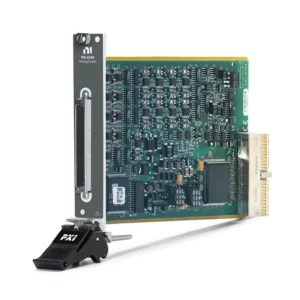
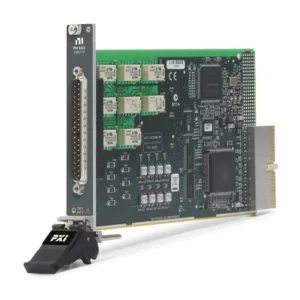
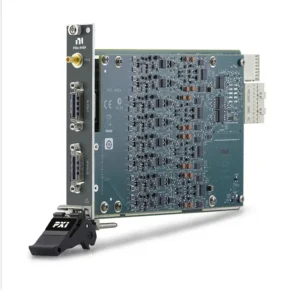
Земля NI PXIe-1209 is a PXI Express oscilloscope designed for high-speed waveform acquisition, automated electronic testing, device characterization, validation, and research applications.
By integrating oscilloscope functionality into the modular PXI Express platform, the PXIe-1209 enables engineers to combine high-speed waveform measurements with other PXI instruments such as digital multimeters, waveform generators, RF instruments, programmable power supplies, switching modules, and digital I/O hardware.
The PXIe-1209 is particularly suitable for automated test systems where oscilloscope measurements must be synchronized with other instruments and incorporated into repeatable software-controlled test sequences.
Product Overview
Земля National Instruments PXIe-1209 is a modular PXI Express oscilloscope intended for automated waveform measurement and electronic validation.
Unlike a traditional benchtop oscilloscope that is primarily operated manually through a front panel, the PXIe-1209 is designed to operate as part of a software-controlled PXI measurement system.
This architecture makes the module particularly useful for production test, automated characterization, research laboratories, electronic design validation, and other applications requiring repeatable waveform acquisition.
Key Features
PXI Express Oscilloscope Architecture
The PXIe-1209 integrates oscilloscope functionality directly into the PXI Express modular instrumentation platform.
- PXI Express modular architecture
- Software-controlled waveform acquisition
- Automated test integration
- High-speed data transfer
- Hardware triggering and synchronization
- Scalable multi-instrument systems
Advantage: Engineers can combine oscilloscope measurements with other PXI instruments inside a single automated test platform.
Two Analog Input Channels
The PXIe-1209 provides 2 аналоговых входа for acquiring and analyzing electrical waveforms.
- 2 аналоговых входа
- Dual-channel waveform acquisition
- Signal comparison
- Input/output response analysis
- Electronic circuit characterization
Two-channel acquisition is useful when engineers need to compare signals such as DUT input and output, reference and measured signals, or two related circuit nodes.
8-Bit Vertical Resolution
The PXIe-1209 uses an 8-bit acquisition architecture optimized for high-speed oscilloscope measurements.
- 8-bit vertical resolution
- High-speed waveform digitization
- Transient signal acquisition
- Electronic waveform analysis
- Automated oscilloscope measurements
Up to 800 MHz Bandwidth
The PXIe-1209 provides bandwidth suitable for analyzing high-speed electronic signals, making it useful for applications requiring substantially higher frequency response than conventional multifunction DAQ hardware.
- High-speed signal measurement
- Electronic device characterization
- Transient analysis
- Digital circuit validation
- Automated waveform testing
High-Speed Waveform Acquisition
The PXIe-1209 is designed to capture rapidly changing electrical signals that cannot be adequately characterized using lower-speed general-purpose data acquisition hardware.
Typical waveform measurements include:
- Pulse signals
- Transient events
- Periodic waveforms
- Electronic switching signals
- Device input and output waveforms
- High-speed test signals
Automated Triggering
Triggering allows the PXIe-1209 to begin waveform acquisition when a defined signal condition occurs.
- Repeatable waveform acquisition
- Event-based measurements
- Transient capture
- Automated test sequencing
- Multi-instrument synchronization
Advantage: Hardware triggering allows waveform measurements to be synchronized with DUT stimulus and other instruments in the PXI system.
PXI Timing and Synchronization
One of the major advantages of using a PXI oscilloscope is access to the PXI platform’s integrated timing and triggering architecture.
The PXIe-1209 can be incorporated into systems where waveform acquisition must be coordinated with other measurement and stimulus instruments.
- PXI trigger integration
- Multi-instrument synchronization
- Repeatable hardware timing
- Automated measurement sequencing
- System-level test synchronization
Software-Controlled Measurements
The PXIe-1209 is designed for programmatic operation within automated measurement applications.
Software can configure acquisition parameters, initiate measurements, retrieve waveform data, perform analysis, and automatically evaluate DUT performance.
- Automated waveform acquisition
- Programmatic instrument configuration
- Automated data processing
- Pass/fail testing
- Production-test integration
Technical Specifications
| Параметр | Описание |
|---|---|
| Product Type | PXI Express Oscilloscope |
| Модель | NI PXIe-1209 |
| Шинный интерфейс | PXI Express |
| Analog Input Channels | 2 |
| Vertical Resolution | 8 Bit |
| Пропускная способность | Up to 800 MHz |
| Acquisition Type | High-Speed Waveform Acquisition |
| Запуск | Hardware Triggering Support |
| PXI Synchronization | Supported |
| Software Control | Supported |
| Primary Function | High-Speed Voltage Waveform Measurement |
| Primary Applications | Automated Test, Electronic Validation, Waveform Analysis, Device Characterization and Research |
What Is a PXI Oscilloscope?
A PXI oscilloscope is a modular waveform measurement instrument that performs functions similar to a traditional digital oscilloscope while operating inside a PXI or PXI Express test system.
The instrument converts analog voltage waveforms into digital data that can be processed, analyzed, displayed, and stored by the PXI controller.
Compared with traditional standalone oscilloscopes, PXI oscilloscopes are particularly well suited to:
- Automated testing
- Multi-instrument systems
- Production testing
- High-channel-count systems
- Repeatable validation
- Programmatic waveform analysis
PXIe-1209 vs Multifunction DAQ
Although both oscilloscopes and multifunction DAQ modules acquire analog voltage signals, they are designed for different measurement requirements.
| Функция | PXIe-1209 Oscilloscope | Multifunction DAQ |
|---|---|---|
| Primary Purpose | High-Speed Waveform Acquisition | General-Purpose Data Acquisition |
| Пропускная способность | High | Typically Lower |
| Transient Capture | Optimized | Application Dependent |
| Waveform Analysis | Primary Application | General Measurement |
| Analog Output | Not Primary Function | Often Available |
| Цифровой ввод-вывод | Not Primary Function | Often Available |
| Best Application | High-Speed Electronic Signals | Sensor and General-Purpose DAQ |
High-Speed Electronic Measurements
High-speed electronic devices can produce signals with rapid rise times, short pulses, and high-frequency components.
The PXIe-1209 can capture these waveforms for automated characterization and validation.
- Electronic switching measurements
- Pulse characterization
- Transient analysis
- Signal integrity testing
- Device response measurement
- Automated waveform verification
Automated Device Characterization
The PXIe-1209 can be incorporated into automated characterization systems where the same waveform measurements must be repeated across many DUT operating conditions.
A typical test sequence may include:
- Configure the DUT operating condition.
- Generate the required stimulus.
- Trigger the PXIe-1209 acquisition.
- Capture the DUT waveform.
- Perform automated waveform analysis.
- Compare results with test limits.
- Store the measurement results.
- Repeat the test at the next operating point.
This approach is significantly more scalable than manually configuring and reading a benchtop oscilloscope for repetitive characterization.
Automated Production Testing
The PXIe-1209 can be integrated into production test systems where waveform characteristics must be automatically verified for every manufactured device.
- Functional testing
- Waveform verification
- Pass/fail testing
- Electronic assembly testing
- End-of-line validation
- Automated quality control
PXI’s modular architecture allows the oscilloscope to share the same system with switching, power, digital, RF, and other measurement instruments.
Stimulus-Response Testing
Many electronic validation applications require a known stimulus to be applied to a DUT while the resulting waveform is measured.
A typical PXI stimulus-response system can be represented as:
PXI Signal Generator → DUT → PXIe-1209 Oscilloscope → Automated Analysis → Pass/Fail Result
Hardware triggering can coordinate stimulus generation and waveform acquisition for repeatable measurements.
Multi-Instrument PXI Systems
The PXIe-1209 can be combined with other modular instruments to create a complete electronic test platform.
A typical system may include:
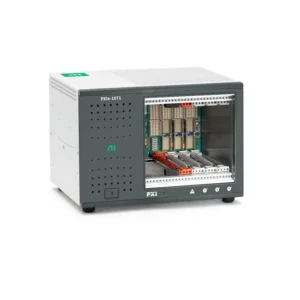
- PXI Express chassis
- PXI embedded or remote controller
- PXIe-1209 oscilloscope
- PXI waveform generator
- PXI digital multimeter
- PXI switch modules
- Programmable power supplies
- Digital I/O modules
- RF measurement instruments
The instruments can be coordinated through software and PXI hardware timing resources to execute complete automated test sequences.
Waveform Analysis Applications
Captured waveform data can be processed by test software to extract electrical and timing parameters.
Depending on the application and analysis software, measurements may include:
- Amplitude
- Frequency
- Period
- Rise time
- Fall time
- Pulse width
- Duty cycle
- Peak values
- RMS values
- Timing relationships
Transient Signal Acquisition
Transient events occur for a limited duration and may require high-speed waveform acquisition to characterize accurately.
The PXIe-1209 can be used to capture transient signals associated with:
- Power sequencing
- Electronic switching
- Device startup
- Control transitions
- Pulse events
- Electronic fault conditions
Signal Integrity Testing
High-speed digital and electronic systems require engineers to evaluate waveform quality and timing behavior.
The PXIe-1209 can support automated signal integrity measurements within its specified bandwidth and acquisition capabilities.
- Waveform shape verification
- Rise and fall time measurements
- Overshoot analysis
- Undershoot analysis
- Timing measurements
- Pulse characterization
Research and Development
Research laboratories can use the PXIe-1209 for high-speed signal acquisition while taking advantage of the modular PXI platform for additional measurement and stimulus functions.
- Electronic research
- Prototype characterization
- Experimental waveform acquisition
- Device development
- Automated laboratory measurement
PXIe-1209 vs Benchtop Oscilloscope
| Функция | PXIe-1209 | Traditional Benchtop Oscilloscope |
|---|---|---|
| Form Factor | PXI Express Module | Standalone Instrument |
| Manual Front Panel | Software Controlled | Typically Included |
| Automation | Designed for Automated Test | Supported but Often Secondary |
| PXI Synchronization | Integrated | Requires External Connections |
| System Expansion | Modular PXI Architecture | Multiple Standalone Instruments |
| Production Integration | Highly Suitable | Application Dependent |
| Best Application | Automated Modular Test Systems | Interactive Bench Measurements |
Choosing a PXI Oscilloscope
When selecting a PXI oscilloscope such as the PXIe-1209, several specifications should be considered together.
- Analog bandwidth
- Sampling rate
- Number of channels
- Vertical resolution
- Input voltage range
- Input impedance
- Onboard memory
- Trigger capabilities
- PXI synchronization requirements
- Data-transfer requirements
Bandwidth and sampling rate are particularly important for high-speed waveform acquisition. The selected instrument should provide sufficient performance for the highest-frequency components and fastest transitions that must be characterized.
PXIe-1209 System Integration
A typical automated measurement system using the PXIe-1209 may follow this architecture:
Test Software → PXI Controller → PXIe-1209 → DUT Waveform Acquisition → Signal Processing → Test Report
Additional PXI modules can provide stimulus generation, power, switching, communication, and other measurement functions.
Software-Controlled Automated Testing
The PXIe-1209 can be controlled programmatically as part of automated test applications.
Software-based control allows engineers to:
- Configure acquisition parameters
- Configure triggering
- Initiate waveform acquisition
- Transfer acquired waveform data
- Perform automated measurements
- Apply pass/fail limits
- Store test results
- Generate automated reports
Industries
- Тестирование полупроводников
- Consumer Electronics
- Automotive Electronics
- Аэрокосмическая и оборонная промышленность
- Industrial Electronics
- Electronic Manufacturing
- Research and Development
- Production Test
- Automated Test Equipment
Applications
Electronic Device Characterization
The PXIe-1209 can acquire high-speed voltage waveforms during electronic device characterization and design verification.
Automated Functional Test
Software-controlled waveform acquisition allows the module to verify DUT signals automatically as part of complete functional test sequences.
Production Test
The PXIe-1209 can perform repeatable waveform measurements in production environments where automated pass/fail decisions are required.
Transient Analysis
High-speed waveform acquisition makes the module suitable for capturing short-duration electronic events and transient signals.
Signal Integrity Measurements
The PXIe-1209 can support automated waveform quality, pulse, timing, and signal integrity measurements within its specified performance limits.
Research and Laboratory Measurement
PXI integration allows researchers to combine high-speed waveform acquisition with additional modular measurement and stimulus hardware.
Recommended Related Products
| NI PXIe-1209 | PXI Express oscilloscope for high-speed waveform acquisition, electronic characterization, and automated test applications. |
| NI PXIe-4463 | Dynamic signal generation module suitable for precision audio, acoustic, vibration, and signal stimulus applications. |
| NI PXIe-6381 | 18-bit multifunction I/O module for general-purpose data acquisition, analog output, digital I/O, and counter/timer applications. |
| NI PXI-6259 | Multifunction DAQ module for lower-speed general-purpose voltage measurement, control, and automated data acquisition. |
| NI PXIe-8267 | High-speed NVMe data storage module for PXI systems requiring large-volume continuous waveform recording. |
Why Choose NI PXIe-1209?
- PXI Express oscilloscope architecture
- 2 аналоговых входа
- 8-bit vertical resolution
- Up to 800 MHz bandwidth class
- High-speed waveform acquisition
- Transient signal capture
- Hardware triggering
- PXI timing and synchronization
- Software-controlled operation
- Suitable for automated waveform analysis
- Designed for electronic characterization
- Suitable for production testing
- Scalable modular test architecture
- Multi-instrument PXI integration
- Designed for automated test systems
Frequently Asked Questions
What is the NI PXIe-1209?
The NI PXIe-1209 is a PXI Express oscilloscope designed for high-speed waveform acquisition, electronic validation, automated functional testing, device characterization, and research applications.
How many input channels does the PXIe-1209 have?
The PXIe-1209 provides 2 аналоговых входа for dual-channel waveform acquisition and analysis.
What is the vertical resolution of the PXIe-1209?
The PXIe-1209 uses an 8-bit acquisition architecture for high-speed oscilloscope measurements.
What is the bandwidth of the PXIe-1209?
The PXIe-1209 is available with high-speed analog bandwidth capability up to approximately 800 MHz, depending on the specific configuration.
Is the PXIe-1209 a multifunction DAQ module?
No. The PXIe-1209 is a PXI Express oscilloscope designed primarily for high-speed waveform acquisition. Multifunction DAQ modules such as the PXIe-6381 are designed for general-purpose analog input, analog output, digital I/O, and counter/timer applications.
Can the PXIe-1209 capture transient signals?
Yes. High-speed transient waveform acquisition is one of the primary applications for a PXI oscilloscope such as the PXIe-1209.
Can the PXIe-1209 be used for automated testing?
Yes. The PXIe-1209 is particularly well suited to software-controlled automated test systems where waveform acquisition must be repeated across multiple DUTs or operating conditions.
Can the PXIe-1209 be synchronized with other PXI instruments?
Yes. The PXI platform provides hardware timing and triggering resources that allow the PXIe-1209 to operate as part of synchronized multi-instrument measurement systems.
Can the PXIe-1209 replace a benchtop oscilloscope?
For automated and modular test applications, the PXIe-1209 can provide oscilloscope functionality within a PXI system. A benchtop oscilloscope may remain preferable when interactive front-panel operation and portable bench use are the primary requirements.
What is the difference between an oscilloscope and a DAQ module?
An oscilloscope is optimized for capturing relatively high-speed waveforms, transients, and electronic signals. A multifunction DAQ module is generally optimized for broader measurement and control tasks including analog input, analog output, digital I/O, and counter/timer functions.
Can the PXIe-1209 be used for production testing?
Yes. Its modular architecture and software-controlled waveform acquisition make it suitable for repetitive production and manufacturing test systems.
What applications are suitable for the PXIe-1209?
Typical applications include electronic device characterization, waveform analysis, automated functional test, production test, transient acquisition, signal integrity testing, electronic design validation, and laboratory research.
What should I check before purchasing a PXIe-1209?
Before purchasing a PXIe-1209, verify the exact part number and configuration, required analog bandwidth, sampling rate, channel count, vertical resolution, input voltage range, input impedance, onboard memory, trigger requirements, PXI Express chassis compatibility, software compatibility, and required cables or accessories.
Заключение
Земля NI PXIe-1209 PXI Express Oscilloscope provides high-speed two-channel waveform acquisition within the modular PXI platform. Its oscilloscope architecture, high-bandwidth measurement capability, hardware triggering, PXI synchronization, and software-controlled operation make it suitable for electronic device characterization, transient acquisition, automated functional test, production validation, signal analysis, and research applications.