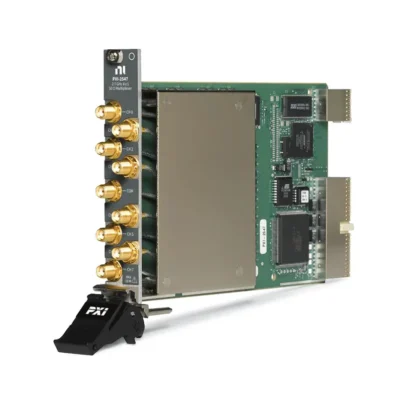
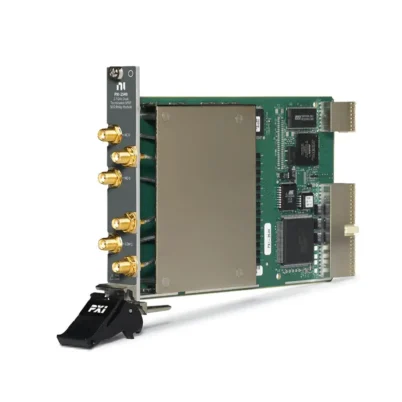
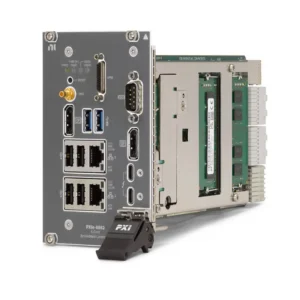
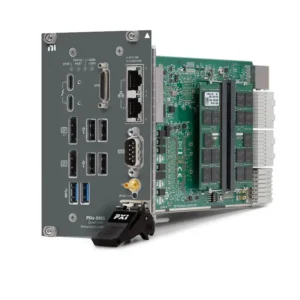
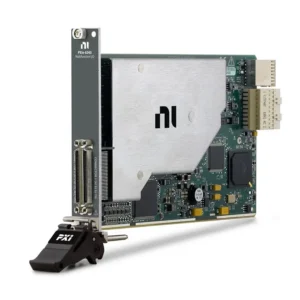
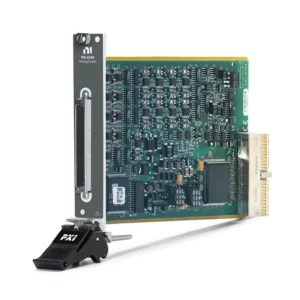
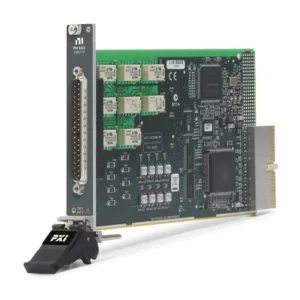
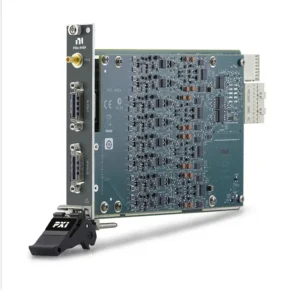
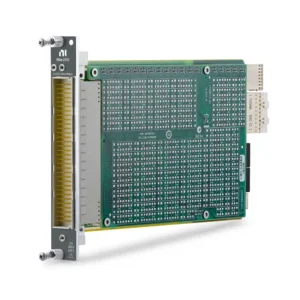
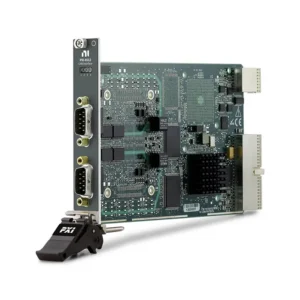
The PXI-2548 is a PXI RF Relay Module from National Instruments, designed for RF signal routing, automated RF testing, switch network expansion, high-channel-count multiplexer construction, and modular PXI test systems. As a 2.7 GHz, 50 Ω, quad SPDT PXI RF relay module, the NI PXI-2548 provides four independent single-pole double-throw RF relay paths in one PXI module. NI lists the PXI-2548 with part number 778572-48.
The NI PXI-2548 is useful for engineers who need flexible RF path control in automated test systems. It can be used to route RF signals between signal generators, spectrum analyzers, vector signal analyzers, RF downconverters, RF upconverters, filters, amplifiers, antennas, and devices under test. Compared with manual RF switching, the PXI-2548 allows RF signal paths to be controlled through software, making it suitable for repeatable test sequences, laboratory automation, and production RF testing.
One of the main advantages of the PXI-2548 RF Relay Module is its quad SPDT topology. Each SPDT relay can switch one common RF path between two selectable paths, giving users flexible signal routing options. This makes the module useful when building higher-channel-count multiplexers or when maintaining uniform signal paths across multiple RF channels. NI describes the PXI-2548 as a general-purpose SPDT switch module that can add flexibility to a switch network or help maintain uniform signal paths in high-channel-count multiplexer systems.
The National Instruments PXI-2548 supports 50 Ω RF signal routing up to 2.7 GHz. This frequency range makes it suitable for many RF and wireless test applications, including RF front-end testing, communication device validation, amplifier testing, filter validation, receiver testing, RF source routing, and automated signal path selection. The module also provides strong insertion loss, VSWR, and isolation performance to help reduce signal degradation during RF switching.
The PXI-2548 uses electromechanical SPDT relays, making it suitable for RF applications that require repeatable signal routing and good isolation. Its SPDT architecture is especially useful for passing high-order harmonics from PXI RF signal upconverter modules or routing multiple RF sources to PXI RF signal downconverter modules. This makes the module practical for RF test systems that need source selection, signal path switching, and multi-instrument routing in a compact PXI format.
Another useful feature of the NI PXI-2548 is onboard relay count tracking. This feature helps users monitor relay usage and estimate relay lifetime, reducing the risk of unexpected downtime in automated test systems. Relay count tracking is especially valuable in production environments where RF switch modules may operate repeatedly over long periods.
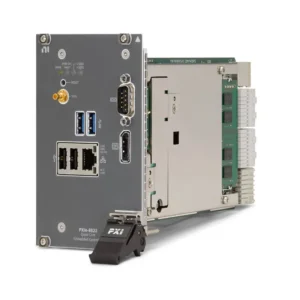
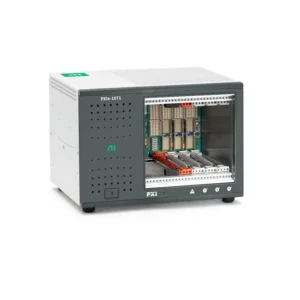
In system integration, the PXI-2548 PXI RF Relay Module installs into a compatible PXI or PXI hybrid chassis and can be used with RF signal generators, spectrum analyzers, vector signal transceivers, digitizers, source measure units, data acquisition modules, and other PXI instruments. This allows engineers to build compact automated RF test systems with software-controlled RF signal routing.
The PXI-2548 is suitable for applications such as RF signal routing, RF switch network expansion, wireless device testing, RF source selection, RF path switching, harmonic routing, receiver testing, production RF test, and automated measurement systems. Its quad SPDT design is especially useful when multiple independent RF switching paths are required in one PXI slot.
Overall, the NI PXI-2548 PXI RF Relay Module is a flexible RF switching solution for PXI-based automated test systems. With its 2.7 GHz bandwidth, 50 Ω impedance, quad SPDT relay topology, relay count tracking, and software-controlled switching capability, the PXI-2548 is well suited for RF signal routing, wireless validation, switch network expansion, production testing, and modular PXI test applications.