PCI Module
USRP Software Defined Radio Device

 National Instruments
 Keysight
 Pasternack
 VTKS
VTKS





A PXI system is a modular test and measurement platform used for automated test, data acquisition, electronic validation, RF testing, semiconductor test, and industrial measurement applications. PXI stands for PCI eXtensions for Instrumentation. It combines the high-speed data bus technology of PCI or PCI Express with a rugged modular mechanical platform designed for instrumentation.
In simple terms, a PXI system is like a professional test platform where engineers can insert different measurement and control modules into one chassis. Instead of using many separate benchtop instruments, a PXI system integrates multiple functions into a compact, high-performance, software-controlled platform.
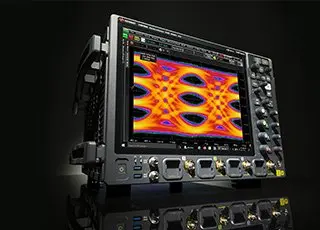
A typical PXI system can include oscilloscopes, digital multimeters, waveform generators, RF signal analyzers, RF signal generators, digital I/O modules, multifunction I/O modules, source measure units, switching modules, timing modules, and FPGA-based modules. Because of this flexibility, PXI is widely used in laboratories, production lines, R&D departments, and automated test systems.
A PXI system is usually built from four main parts:
Each part plays an important role in the performance, scalability, and reliability of the complete test system.

PXI Chassis
PXI Controller
PXI and PXIe Modules
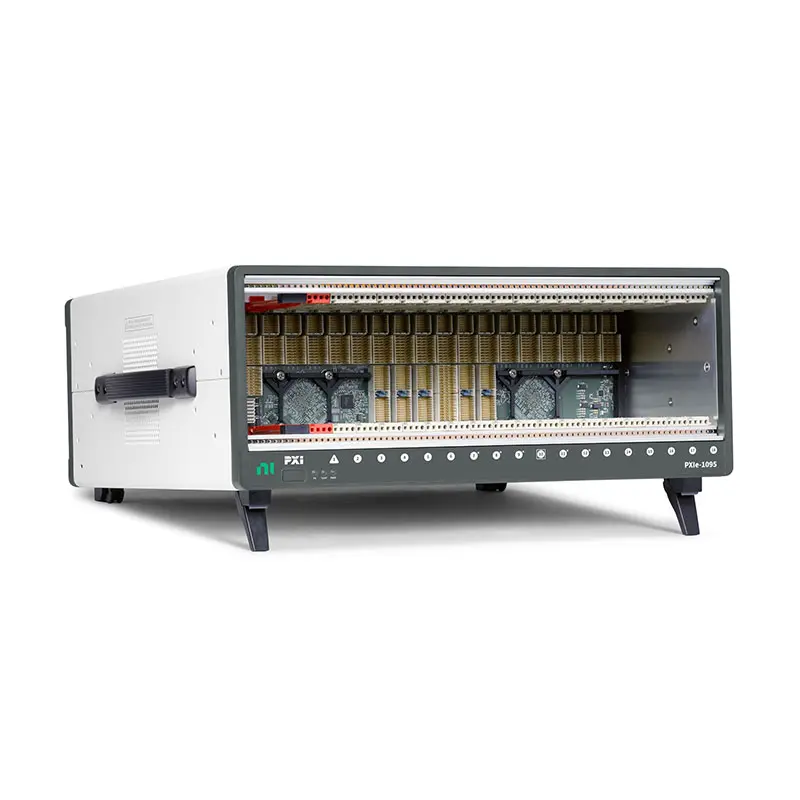
The PXI chassis is the physical frame of the system. It provides power, cooling, timing, synchronization, and communication connections for all installed modules.
PXI chassis are available in different slot counts, such as 4-slot, 8-slot, 14-slot, 18-slot or larger configurations. The number of slots depends on how many modules the system needs.
For example, a simple data acquisition system may only require a small PXI chassis with several I/O modules. A complex RF validation system or semiconductor test platform may require a larger PXIe chassis with high-bandwidth modules, timing cards, switching modules, and embedded controllers.
The chassis is one of the most important parts of a PXI system because it determines system capacity, bandwidth, synchronization capability, power availability, and future expansion.
Common PXI chassis applications include:
PXIe Chassis

PXI Chassis
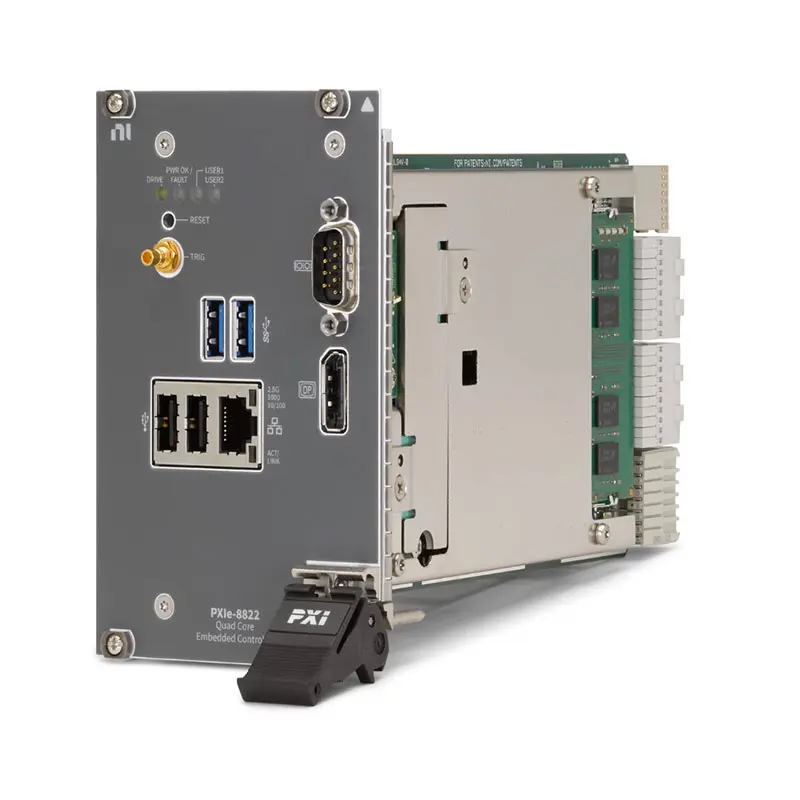
The PXI controller works as the computer of the PXI system. It controls the installed modules, runs the test software, processes measurement data, and communicates with external systems.
There are two common control methods:
An embedded PXI controller is installed directly into the PXI chassis. It usually runs Windows or real-time operating systems and provides CPU, memory, storage, Ethernet, USB, display output, and other computer functions.
This type of controller is suitable for compact, integrated, and high-reliability test systems.
A remote controller uses an external PC or workstation connected to the PXI chassis through PCIe, Thunderbolt, or other interface options. This is useful when users need more computing power, easier PC upgrades, or separation between the test rack and control computer.
The choice between embedded and remote control depends on system architecture, processing requirements, test environment, and maintenance strategy.
Reasons to buy
Reasons to avoid
PXI modules are the functional instruments inside the system. Each module performs a specific measurement, generation, switching, control, or communication task.
Common PXI/PXIe modules include:
The modular design allows engineers to configure the system according to the exact test requirement. If the project changes, modules can be replaced or added without redesigning the entire system.
For example, an engineer can build a PXI system for data acquisition first, then later add RF modules, switching modules, or digital pattern modules to expand the system.
Reasons to buy
Reasons to avoid
PXI systems are software-defined platforms. The hardware provides measurement and control capability, but the software defines how tests are executed, how data is processed, and how results are reported.
Common software environments include:
Software is especially important in automated test systems because engineers need to control multiple instruments, execute test sequences, analyze results, store data, and generate reports automatically.
Compared with manual benchtop testing, PXI systems can significantly improve repeatability, speed, accuracy, and production efficiency.
PXI and PXIe are closely related, but they are not exactly the same.
PXI is based on PCI bus technology, while PXIe, also called PXI Express, is based on PCI Express technology. PXIe provides much higher data bandwidth and is more suitable for high-speed applications such as RF signal analysis, high-speed digitizing, wideband communication test, radar test, and semiconductor validation.
In general:
PXI is suitable for many traditional test and measurement applications where moderate bandwidth is enough.
PXIe is better for high-performance applications requiring faster data transfer, lower latency, and higher system throughput.
Many modern test systems use PXIe chassis and PXIe modules because they provide higher performance and better long-term scalability.
PXI systems are popular because they offer several advantages compared with traditional standalone instruments.
Engineers can select only the modules they need. This makes PXI flexible for different test applications. A system can be customized for analog measurement, digital test, RF test, switching, control, or mixed-signal validation.
PXIe systems provide high-bandwidth data transfer through PCI Express architecture. This is important for high-speed digitizers, RF analyzers, waveform generators, and FPGA-based processing modules.
PXI chassis provide timing and synchronization features that allow multiple modules to work together with precise timing. This is critical in multi-channel measurement, RF test, radar simulation, semiconductor test, and synchronized data acquisition.
A PXI system can replace multiple benchtop instruments in a single chassis. This reduces rack space, cabling complexity, and system integration difficulty.
PXI systems are designed for automated testing. Engineers can create test sequences, automate measurements, control multiple instruments, and generate test reports through software.
If the test requirement grows, users can add more modules or upgrade the controller and chassis. This makes PXI suitable for long-term engineering projects and production test platforms.
PXI is widely used in professional test environments because it supports repeatable, maintainable, and scalable system integration. This is important for companies building production test stations or long-life validation platforms.
Traditional benchtop instruments are easy to use and suitable for manual testing, troubleshooting, and general laboratory work. However, when the test system becomes complex, manual operation can be slow and difficult to scale.
PXI systems are more suitable for automated and integrated test platforms.
Compared with benchtop instruments, PXI systems offer:
However, PXI systems usually require more engineering setup, software development, and system integration experience. For simple one-time measurements, a benchtop instrument may be enough. For repeated, automated, high-speed, or multi-channel testing, PXI is usually a better choice.
When selecting a PXI system, engineers should consider the following factors:
PXI is widely used to build automated test equipment for electronic products, circuit boards, power modules, sensors, communication devices, and industrial controllers. Engineers can combine measurement, signal generation, switching, and software control in one platform.
PXI systems are suitable for high-channel-count data acquisition, including voltage, current, temperature, strain, vibration, pressure, and dynamic signal measurement. They are commonly used in research, industrial monitoring, and validation testing.
PXIe platforms are often used for RF signal generation, spectrum analysis, wireless communication testing, 5G validation, radar test, satellite communication test, and wideband signal analysis.
PXI systems can be used for semiconductor characterization, wafer test, device validation, production test, and mixed-signal IC testing. Source measure units, digital pattern modules, high-speed digitizers, and switching modules are commonly used in these systems.
Automotive engineers use PXI systems for ECU testing, battery management system testing, sensor validation, ADAS test, in-vehicle network testing, and hardware-in-the-loop simulation.
PXI and PXIe systems are commonly used in radar, avionics, electronic warfare, communication, navigation, and mission-critical test systems because they support high-speed, synchronized, and rugged test architectures.
PXI platforms are widely used in manufacturing environments where speed, repeatability, and automation are important. A PXI system can help reduce test time and improve production efficiency.
Modern electronic products are becoming more complex, faster, and more integrated. Engineers need test systems that can handle high-speed signals, multiple channels, software automation, and precise synchronization.
PXI provides a strong platform for these requirements. It allows engineers to build compact, modular, high-performance test systems that can be customized for different applications.
For companies involved in R&D, manufacturing, validation, and quality control, PXI systems can improve test efficiency, reduce manual work, increase repeatability, and support scalable test architecture.
A PXI system is a modular, software-defined test and measurement platform that combines a chassis, controller, instrument modules, and software. It is widely used in automated test, data acquisition, RF test, semiconductor validation, automotive electronics, aerospace, defense, and industrial measurement.
Compared with traditional benchtop instruments, PXI systems provide better integration, higher speed, precise synchronization, compact size, and excellent scalability. For engineers who need reliable, repeatable, and automated test solutions, PXI remains one of the most powerful platforms in the test and measurement industry.
Whether you are building a production test station, an RF validation platform, a semiconductor test system, or a high-channel-count data acquisition system, PXI provides the flexibility and performance required for modern engineering applications.


No account yet?
Create an Account