



Product Introduction
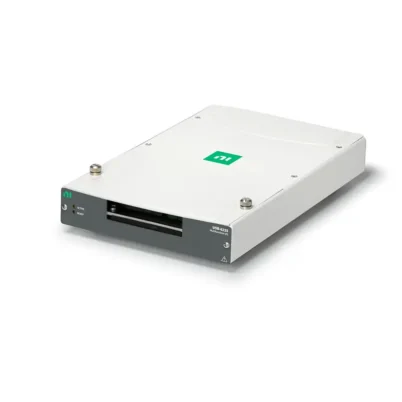
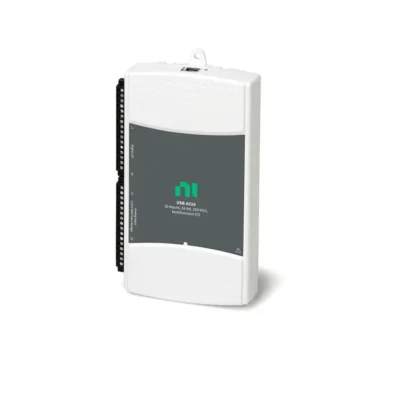
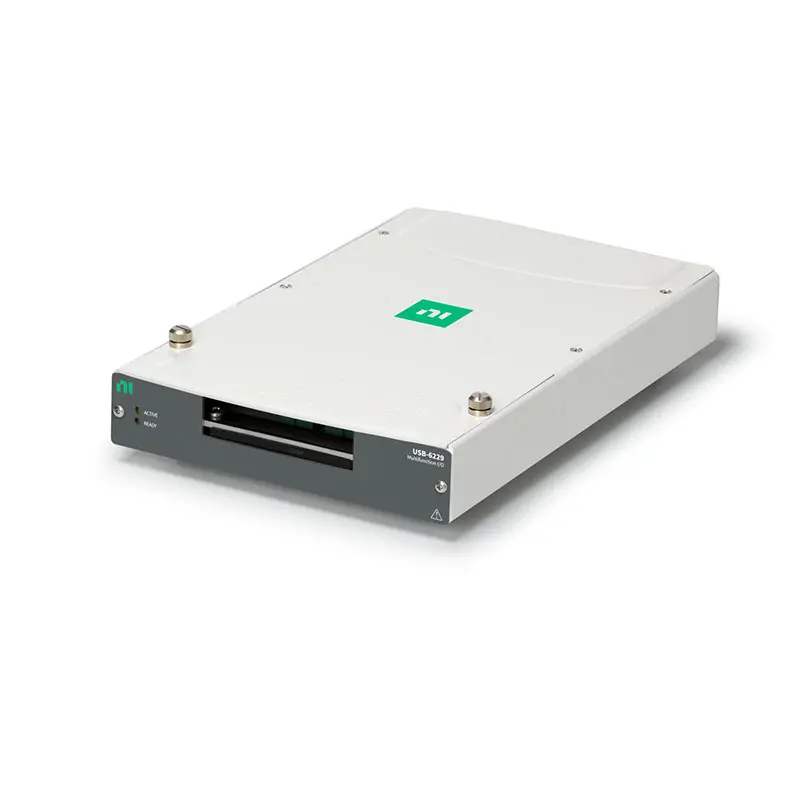
Земля NI USB-6229 is a high-channel-count M Series multifunction data acquisition (DAQ) device designed for laboratory measurement, automated test, data logging, control, research, and industrial measurement applications.
The USB-6229 combines 32 аналоговых входных канала, до 250 kS/s analog input sampling, 4 аналоговых выходных канала, 48 digital I/O lines, and hardware counter/timer functionality in a single USB-connected measurement device.
Its multifunction architecture allows engineers to acquire analog signals, generate analog outputs, monitor or control digital signals, perform frequency and event measurements, and synchronize measurement tasks from one DAQ platform.
Product Overview
Земля National Instruments USB-6229 belongs to the NI M Series family of multifunction DAQ devices.
A typical measurement architecture is:
Sensors / DUT → USB-6229 → USB → Host Computer → NI-DAQmx / LabVIEW
Because it uses USB connectivity, the USB-6229 is suitable for desktop and laboratory systems where installing an internal PCI or PCI Express DAQ card is inconvenient.
Key Features
32 Analog Input Channels
The USB-6229 provides up to 32 single-ended or 16 differential analog input channels, allowing a relatively large number of voltage signals to be acquired with one DAQ device.
Typical analog input applications include:
- Voltage measurement
- Sensor data acquisition
- Automated test
- Laboratory experiments
- Process monitoring
- Electronic validation
- Multi-channel data logging
250 kS/s Analog Input Sampling
The USB-6229 supports an aggregate analog input sampling rate of up to 250 kS/s.
The analog inputs use a multiplexed architecture, meaning the available sampling rate is shared across the active analog input channels rather than providing 250 kS/s independently on every channel.
This distinction is important when selecting the USB-6229 for multi-channel acquisition applications.
16-Bit Analog Input Resolution
The USB-6229 provides 16-bit analog input resolution for general-purpose voltage measurements and sensor acquisition.
The combination of 16-bit resolution and programmable input ranges allows the device to accommodate a wide variety of measurement signals.
Programmable Analog Input Ranges
The USB-6229 supports multiple programmable analog input ranges, allowing measurement sensitivity to be adapted to the expected signal amplitude.
Typical bipolar ranges include:
- ±10 V
- ±5 V
- ±1 V
- ±0.2 V
Selecting the smallest appropriate range can improve effective measurement resolution for lower-amplitude signals.
4 Analog Output Channels
The USB-6229 provides 4 аналоговых выходных канала for programmable voltage generation.
Analog outputs can be used for:
- Device stimulus
- Control voltage generation
- Waveform generation
- Sensor simulation
- Automated test
- Laboratory experiments
16-Bit Analog Output Resolution
The analog output subsystem provides 16-битное разрешение, allowing programmable voltage signals to be generated for compatible test and control applications.
48 Digital I/O Lines
The USB-6229 provides 48 digital I/O lines for digital control, status monitoring, triggering, and mixed-signal test applications.
Digital I/O applications can include:
- Relay control
- Switch monitoring
- DUT control
- Digital status acquisition
- Test fixture control
- Trigger generation
- Digital logic interfacing
Counter/Timer Functionality
The USB-6229 includes hardware counter/timer resources for timing and pulse-related measurements.
Counter applications can include:
- Подсчет событий
- Frequency measurement
- Period measurement
- Pulse-width measurement
- Encoder measurement
- Генерация импульсов
USB Connectivity
The USB-6229 connects to a host computer through USB, eliminating the need to install an internal measurement card.
This makes the device convenient for:
- Desktop measurement systems
- Laboratory benches
- Portable test systems
- University laboratories
- Research environments
- Temporary test setups
NI-DAQmx Support
The USB-6229 is supported by the НИ-DAQmx driver architecture for compatible operating systems and development environments.
NI-DAQmx provides configuration and programming support for analog input, analog output, digital I/O, counters, triggering, and timing.
Technical Specifications
| Параметр | Спецификация |
|---|---|
| Product Type | M Series Multifunction DAQ Device |
| Модель | USB-6229 |
| Manufacturer | Национальные инструменты |
| Шинный интерфейс | USB |
| Analog Input Channels | 32 Single-Ended / 16 Differential |
| Analog Input Architecture | Multiplexed |
| Maximum AI Sample Rate | 250 kS/s Aggregate |
| Analog Input Resolution | 16 Bit |
| Maximum Analog Input Range | ±10 V |
| Analog Output Channels | 4 |
| Analog Output Resolution | 16 Bit |
| Цифровой ввод-вывод | 48 Lines |
| Counter/Timers | 2 |
| Counter Resolution | 32 Bit |
| Driver | НИ-DAQmx |
| Product Family | NI M Series |
| Primary Applications | Data Acquisition, Automated Test, Data Logging, Laboratory Measurement and Control |
How Does the USB-6229 Work?
The USB-6229 acquires analog and digital signals from sensors or devices under test and transfers measurement data to a host computer through USB.
A simplified analog acquisition path is:
Sensor / Signal → USB-6229 Analog Input → ADC → USB → Computer → Measurement Software
For automated test applications, the device can also generate analog and digital outputs:
Computer → USB-6229 → Analog / Digital Output → DUT → USB-6229 Input → Measurement
This bidirectional measurement and control capability makes the USB-6229 suitable for multifunction test systems.
What Is an M Series Multifunction DAQ Device?
NI M Series devices combine several measurement and control functions within one DAQ platform.
Depending on the model, these functions can include:
- Analog input
- Analog output
- Digital input
- Digital output
- Counter/timers
- Hardware timing
- Запуск
The USB-6229 is particularly useful when a system requires a relatively large number of analog and digital channels without requiring extremely high sampling rates.
32 Single-Ended vs 16 Differential Inputs
The USB-6229 can provide up to 32 single-ended analog input channels или 16 differential analog input channels.
| Конфигурация | Maximum Channels | Typical Advantage |
|---|---|---|
| Single-Ended | 32 | Higher Channel Count |
| Differential | 16 | Better Noise Rejection |
Differential measurements are often preferred in electrically noisy environments or when signal sources do not share a clean common reference.
Multiplexed Analog Input Architecture
The USB-6229 uses a multiplexed analog input architecture.
Multiple analog input channels share the ADC and are sampled sequentially.
A simplified architecture is:
AI0 / AI1 / AI2 / AI3 / … → Multiplexer → ADC → Digital Data
Therefore, the specified 250 kS/s maximum sampling rate should not be interpreted as 250 kS/s simultaneously on every analog input channel.
Multi-Channel Data Logging
The relatively high analog input channel count makes the USB-6229 useful for multi-channel data logging applications.
Typical signals can include:
- Voltage sensors
- Pressure sensor outputs
- Position signals
- Process signals
- Laboratory instrumentation outputs
- Conditioned temperature signals
Sensors requiring excitation, isolation, amplification, or specialized conditioning may require external signal-conditioning hardware.
Automated Test Applications
The combination of analog input, analog output, digital I/O, and counter/timers makes the USB-6229 suitable for automated functional test systems.
A typical sequence can:
- Configure digital control lines.
- Generate an analog stimulus.
- Activate the device under test.
- Acquire analog response signals.
- Measure digital states or pulse signals.
- Analyze the acquired data.
- Determine pass or fail status.
Analog Output Generation
The four analog outputs can generate programmable voltage signals for test, simulation, and control applications.
A typical stimulus-response test architecture is:
USB-6229 AO → DUT → USB-6229 AI → Computer Analysis
This allows the same multifunction DAQ device to generate test signals and measure the resulting DUT response.
Digital I/O Applications
The 48 digital I/O lines provide substantial flexibility for mixed-signal test systems.
They can be used for:
- Test fixture control
- Relay switching
- Device configuration
- Status monitoring
- Digital triggering
- Logic control
- Production test interfaces
Counter/Timer Applications
The two 32-bit counter/timers can perform hardware-timed pulse and event measurements.
Типичные применения включают:
- Frequency measurement
- Подсчет событий
- Period measurement
- Pulse-width measurement
- Encoder acquisition
- Генерация импульсов
Encoder Measurement
Compatible incremental encoder signals can be acquired using the counter/timer subsystem.
A typical architecture is:
Encoder A/B/Z → USB-6229 Counter → Position / Direction → Host Application
This allows motion-related measurements to be combined with analog and digital data acquisition.
Frequency Measurement
The USB-6229 can use its hardware counters to measure compatible digital pulse frequencies.
Possible signal sources include:
- Tachometers
- Pulse-output sensors
- Encoders
- Digital oscillators
- Rotational speed sensors
Hardware Triggering
Hardware triggering allows measurement operations to begin or coordinate according to an external or internally routed event.
A typical triggered acquisition architecture is:
External Trigger → USB-6229 → Analog Acquisition → USB → Host Application
This is useful for capturing specific DUT events and synchronizing measurement operations.
Sensor Measurement
The USB-6229 directly measures compatible voltage signals. Many sensors require external signal conditioning before connection to a multifunction DAQ device.
Signal conditioning may be required for:
- Термопары
- РТД
- Strain gauges
- Load cells
- IEPE accelerometers
- Current signals
- High-voltage signals
Always verify signal level, grounding, isolation, excitation, bandwidth, and sensor requirements before connecting a sensor to the USB-6229.
USB-6229 vs PCI-6229
The USB-6229 and PCI-6229 belong to the same M Series multifunction DAQ family but use different host interfaces.
| Функция | USB-6229 | PCI-6229 |
|---|---|---|
| Host Interface | USB | PCI |
| Analog Inputs | 32 SE / 16 DI | 32 SE / 16 DI |
| Maximum AI Rate | 250 kS/s | 250 kS/s |
| Analog Outputs | 4 | 4 |
| Цифровой ввод-вывод | 48 | 48 |
| Installation | External | Internal PC Card |
| Typical Advantage | Easy USB Connectivity | Internal Desktop Integration |
USB-6229 vs PCIe-6323
The USB-6229 is an M Series USB device, while newer PCI Express multifunction DAQ devices such as the PCIe-6323 belong to the X Series family.
When comparing these devices, consider:
- USB versus PCI Express interface
- Analog input channel count
- Sampling performance
- Digital I/O requirements
- Counter/timer architecture
- Hardware timing requirements
- System expansion requirements
USB-6229 vs Simultaneous-Sampling DAQ
| Функция | USB-6229 | Simultaneous-Sampling DAQ |
|---|---|---|
| Analog Input Architecture | Multiplexed | Синхронный |
| Channel Density | High | Usually Lower |
| Interchannel Sampling | Sequential | Same-Time Sampling |
| Phase-Sensitive Measurement | Limited by Multiplexing | Better Suited |
| Typical Application | General Data Acquisition | Dynamic / Phase-Related Measurement |
USB-6229 vs CompactDAQ
The USB-6229 provides fixed multifunction I/O in a single device, while CompactDAQ uses a modular chassis and interchangeable C Series modules.
| Функция | USB-6229 | Компактный ЦАП |
|---|---|---|
| Architecture | Fixed Multifunction DAQ | Modular |
| Module Replacement | No | Да |
| Built-In Analog and Digital I/O | Да | Depends on Installed Modules |
| Sensor-Specific Conditioning | External When Required | Available Through C Series Modules |
| Expansion Flexibility | Fixed | High |
| Typical Advantage | Simple Multifunction Architecture | Flexible Sensor Measurement Platform |
NI-DAQmx Integration
The USB-6229 uses the НИ-DAQmx driver for device configuration and programming.
NI-DAQmx supports measurement tasks including:
- Analog input
- Analog output
- Digital input
- Digital output
- Counter input
- Counter output
- Timing
- Запуск
LabVIEW Integration
The USB-6229 can be used with compatible versions of ЛабВью through NI-DAQmx.
A typical data acquisition workflow is:
Create DAQmx Task → Configure Channels → Configure Timing → Configure Trigger → Start → Read Data → Analyze / Log → Stop
The same application can combine analog, digital, and counter measurements according to the test requirements.
Legacy System Replacement
The USB-6229 is frequently encountered in existing laboratory, research, and automated test systems.
When replacing an existing USB-6229, verify:
- Exact model and part number
- Analog input channel configuration
- Terminal configuration
- Analog output requirements
- Digital I/O wiring
- Counter/timer usage
- USB interface
- Connector and cable configuration
- NI-DAQmx version
- LabVIEW version
- Operating system compatibility
- Existing application software
Replacing the device with a newer DAQ model may require changes to wiring, connectors, software configuration, timing, or application code.
How to Choose a Multifunction DAQ Device
Before selecting the USB-6229, evaluate:
- Required analog input channel count
- Single-ended or differential measurement
- Required aggregate sampling rate
- Signal voltage range
- Required resolution
- Analog output requirements
- Digital I/O requirements
- Counter/timer requirements
- USB connectivity requirements
- Triggering requirements
- Signal-conditioning requirements
- Connector and cable requirements
- NI-DAQmx compatibility
- Operating system compatibility
Industries
- Automated Test
- Industrial Measurement
- Electronics Testing
- Research and Development
- Laboratory Automation
- Education
- Manufacturing Test
- Мониторинг процессов
- Control-System Development
- Prototype Validation
Applications
Многоканальный сбор данных
With up to 32 single-ended analog input channels, the USB-6229 is suitable for systems requiring acquisition from multiple voltage signals.
Automated Test
Analog input, analog output, digital I/O, and counters can be combined to create multifunction automated test systems.
Data Logging
The USB-6229 can acquire and log multiple conditioned sensor and voltage signals for laboratory and industrial monitoring applications.
Electronic Validation
Analog outputs can stimulate a DUT while analog and digital inputs measure the resulting response.
Laboratory Measurement
USB connectivity and multifunction I/O make the USB-6229 convenient for desktop laboratory experiments and research systems.
Control Applications
Analog and digital outputs can be combined with measurement inputs for compatible monitoring and control applications.
Recommended Related Products
| USB-6229 | High-channel-count USB M Series multifunction DAQ device with 32 analog inputs and 48 digital I/O lines. |
| PCI-6229 | PCI version for desktop systems requiring similar M Series multifunction DAQ functionality. |
| PXI-6229 | PXI platform version for modular automated test and measurement systems. |
| USB-6259 | Higher-performance M Series USB multifunction DAQ option for applications requiring faster analog acquisition. |
| USB-6363 | X Series USB multifunction DAQ option for newer high-performance data acquisition and automated test systems. |
Why Choose USB-6229?
- 32 single-ended or 16 differential analog inputs
- 250 kS/s aggregate analog input sampling
- 16-bit analog input resolution
- Programmable input ranges up to ±10 V
- 4 аналоговых выходных канала
- 16-bit analog output resolution
- 48 digital I/O lines
- Two 32-bit counter/timers
- USB connectivity
- NI M Series multifunction architecture
- Hardware timing and triggering
- NI-DAQmx support
- Интеграция LabVIEW
- High channel density
- Automated test applications
- Multi-channel data logging
- Laboratory measurement
Frequently Asked Questions
What is the NI USB-6229?
The NI USB-6229 is an M Series USB multifunction DAQ device that combines analog input, analog output, digital I/O, and hardware counter/timer functionality for data acquisition and automated test applications.
How many analog input channels does USB-6229 have?
The USB-6229 supports up to 32 single-ended or 16 differential analog input channels.
What is the maximum sample rate of USB-6229?
The USB-6229 supports an aggregate analog input sampling rate of up to 250 kS/s.
Does USB-6229 provide 250 kS/s on every analog input channel?
No. The USB-6229 uses a multiplexed analog input architecture. The 250 kS/s specification represents the maximum aggregate sampling rate rather than 250 kS/s independently on every channel.
What is the analog input resolution of USB-6229?
The USB-6229 provides 16-bit analog input resolution.
What is the analog input range of USB-6229?
The USB-6229 supports programmable bipolar input ranges up to approximately ±10 V, with smaller ranges available for lower-amplitude signals.
How many analog outputs does USB-6229 have?
The USB-6229 provides 4 аналоговых выходных канала.
How many digital I/O lines does USB-6229 have?
The USB-6229 provides 48 digital I/O lines.
How many counter/timers does USB-6229 have?
The device provides two 32-bit counter/timers for frequency, period, pulse, encoder, and event-counting applications.
Can USB-6229 measure encoder signals?
Yes. Compatible encoder signals can be measured using the hardware counter/timer resources.
Can USB-6229 generate analog signals?
Yes. Its four analog output channels can generate programmable voltage signals for stimulus, simulation, test, and control applications.
Is USB-6229 a simultaneous-sampling DAQ device?
No. The USB-6229 uses a multiplexed analog input architecture. Applications requiring true simultaneous sampling should use a DAQ device specifically designed with simultaneous ADC channels.
Can USB-6229 measure thermocouples directly?
The USB-6229 is primarily a voltage measurement device. Accurate thermocouple measurement typically requires appropriate signal conditioning and cold-junction compensation. A sensor-specific DAQ solution may be more appropriate for dedicated temperature measurement applications.
What software is used with USB-6229?
The USB-6229 uses the НИ-DAQmx driver and can be integrated with compatible LabVIEW and other NI-DAQmx-supported development environments.
What is the difference between USB-6229 and PCI-6229?
The primary difference is the host interface and physical architecture. The USB-6229 is an external USB device, while the PCI-6229 installs internally in a compatible PCI slot.
What is the difference between USB-6229 and USB-6259?
Both belong to the M Series multifunction DAQ family. The USB-6259 targets applications requiring higher analog acquisition performance, while the USB-6229 is suitable for general-purpose high-channel-count data acquisition where 250 kS/s aggregate sampling is sufficient.
Is USB-6229 suitable for automated test?
Yes. Its combination of analog inputs, analog outputs, digital I/O, counters, triggering, and USB connectivity makes it suitable for many automated functional test and electronic validation applications.
What should I check before purchasing USB-6229?
Verify the required analog input channel count, single-ended or differential configuration, aggregate sampling rate, input voltage range, analog output requirements, digital I/O count, counter/timer requirements, connector and cable configuration, USB interface, signal-conditioning requirements, NI-DAQmx version, operating system, and application software compatibility.
Заключение
Земля NI USB-6229 M Series Multifunction DAQ Device combines up to 32 single-ended or 16 differential analog inputs, 16-bit resolution, 250 kS/s aggregate sampling, four analog outputs, 48 digital I/O lines, hardware counter/timers, triggering, and convenient USB connectivity. Its high I/O channel density and multifunction architecture make it well suited for automated test, multi-channel data logging, laboratory measurement, electronic validation, research, and general-purpose data acquisition systems.