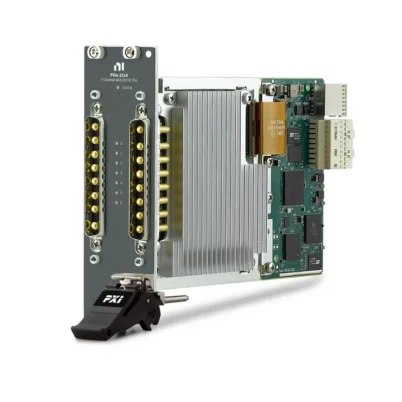
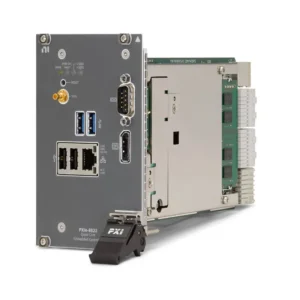
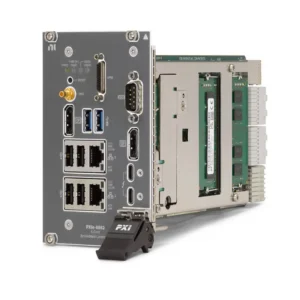
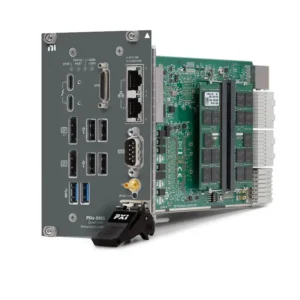
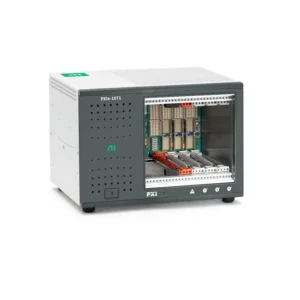
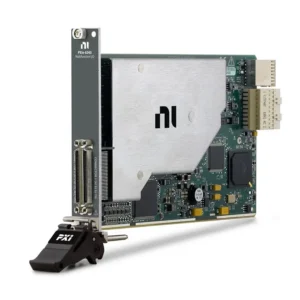
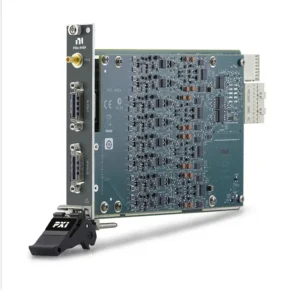
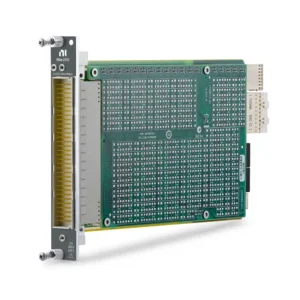
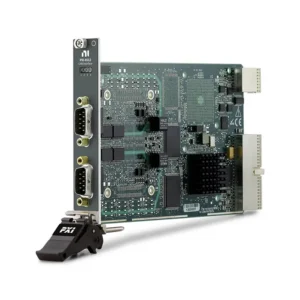
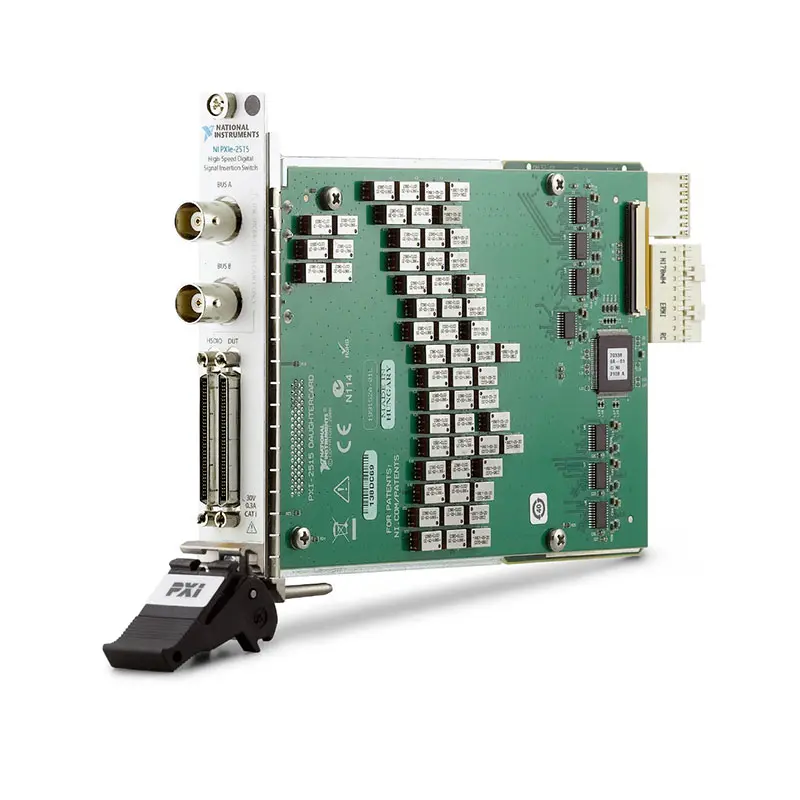
The NI PXIe-2515 is a specialized Fault Insertion Unit (FIU) designed for high-speed serial digital signals. Unlike general-purpose FIUs that prioritize current capacity, the PXIe-2515 is engineered to maintain signal integrity for high-speed differential buses like CAN, FlexRay, and LVDS. It features controlled 100 $\Omega$ differential impedance and a high bandwidth of 600 MHz, ensuring that the module remains transparent to the system during normal operation while providing the precision needed to inject faults into sensitive communication lines.
1. Ключевые технические характеристики
| Функция | Спецификация |
| Пропускная способность | 600 MHz (Differential) |
| Differential Impedance | 100 $\Omega$ (Controlled) |
| Channel Count | 2 high-speed differential feedthrough channels |
| Fault Modes | Open, Short-to-Bus (2 buses), Pin-to-pin Short |
| Max Voltage | 60 В постоянного тока |
| Max Current | 1.0 A (Continuous) |
| Шинный интерфейс | PXI Express (Gen 1 x1) |
2. Подробное техническое описание
High-Speed Signal Integrity
The primary challenge in fault insertion for digital communication is preventing the switch itself from distorting the signal. The PXIe-2515 addresses this with a signal path optimized for high frequencies. By maintaining a constant 100 $\Omega$ differential impedance, it minimizes reflections and jitter, allowing Hardware-in-the-Loop (HIL) systems to test “broken” hardware without the test equipment itself causing communication errors.
Hardware-Timed Determinism
Built for the PXI Express platform, the PXIe-2515 supports advanced triggering and hardware-timed scanning. This allows engineers to synchronize fault injection with the exact state of a simulation. For instance, you can program the module to open a CAN line at the precise moment a specific frame ID is detected on the bus, enabling highly granular safety protocol validation.
Versatile Fault Topology
Despite its focus on speed, the PXIe-2515 provides the full suite of fault capabilities:
Разрыв цепи Simulates a cut wire.
Short to Power/Ground: Connects either differential line (Data+ or Data-) to one of two external fault buses.
Короткое замыкание между выводами Shorts the differential pair together to simulate cable insulation failure.
3. Сценарии использования и применения
ADAS and Automotive Ethernet Testing
As vehicles move toward higher bandwidths for Advanced Driver Assistance Systems (ADAS), testing how a car reacts to a faulty sensor feed is critical. The PXIe-2515 is used to inject faults into high-speed data lines to verify that the vehicle’s safety logic handles data loss or corruption gracefully.
Avionics Data Bus Validation
In aerospace, ensuring the reliability of data buses like AFDX or high-speed serial links is a matter of mission success. The PXIe-2515 allows engineers to simulate harness damage in a laboratory environment, ensuring the flight computer can still operate using redundant paths.
High-Speed Serial Communication Research
Research labs developing new differential communication protocols use the PXIe-2515 as a “stress test” tool to determine the physical layer limits and error-handling capabilities of their transceivers.
4. Сравнение продуктов и рекомендации
NI PXIe-2515 (The Speed Specialist): 600 MHz bandwidth, 100 $\Omega$ impedance. Best for CAN, FlexRay, LVDS, and high-speed digital signals.
NI PXIe-2512 / 2514 (The Power Workhorses): 40 channels, 2 A capacity. Best for standard automotive signals, sensor power rails, and low-speed digital I/O where bandwidth is not the priority.
NI PXIe-2527 (High-Voltage Mux): 300V capacity. Best for power-level switching rather than fault insertion for data buses.
Резюме
The NI PXIe-2515 is an elite tool for HIL engineers who cannot afford to compromise on signal integrity. By combining 600 MHz bandwidth with robust fault-injection capabilities, it provides the most accurate simulation of physical layer failures for modern high-speed communication systems. We offer professional technical support for high-speed system design and support project pricing for large-scale automotive and aerospace validation facilities.



 Обзор
Обзор